then Add to Home Screen.
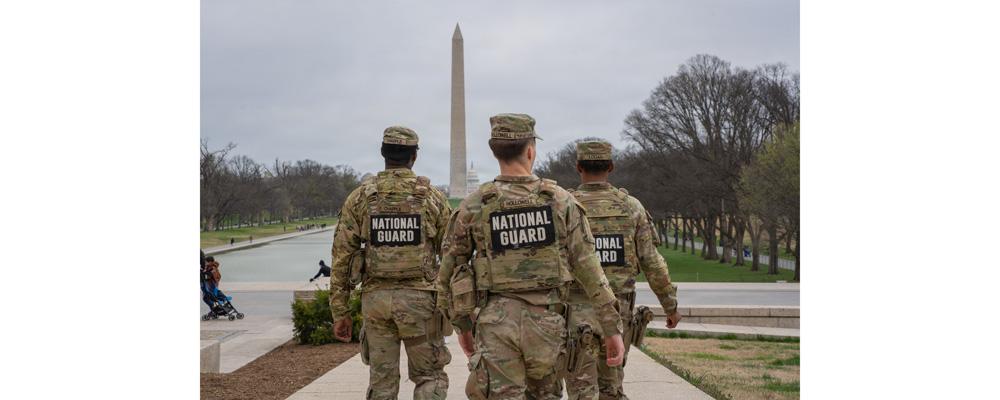
The association is accelerating its push for Duty Status Reform, its top priority in deliberations on fiscal 2027 defense legislation.
Earlier this month, NGAUS called on the adjutants general and state congressional action officers nationwide to urge their elected representatives to co-sponsor the Duty Status Reform Act.
The legislation is already under consideration in the House (H.R. 6976), and a companion bill soon will be introduced in the Senate, according to Jon Eisberg, the association vice president for government affairs.
Movement in the Senate makes this the right time to aggressively push for House co-sponsors, Eisberg told state Guard leaders in a communication April 13.
DSR would consolidate an outdated, confusing and inequitable patchwork of more than 30 distinct Guard and Reserve federal duty statues into four clear, modern categories.
“This makes the Guard easier to use, easier to understand and easier to administer — especially when members transition between missions,” said retired Maj. Gen. Francis M. McGinn, the NGAUS president. “It would also ensure Guardsmen get all the benefits they earn, which is not the case under the current system.”
Reps. Gil Cisneros, D-Calif., and Jack Bergman, R-Mich., both members of the House Armed Services Committee, introduced H.R. 6976 in January.
“We owe it to our service members to deliver this much-needed change and ensure they are receiving equitable pay and benefits,” said Cisneros, a Navy veteran and former undersecretary of defense for personnel and readiness.
“Having worked on this issue during my time at the Pentagon, I learned about the complexity of the current duty status system and how it hurts our readiness and quality of life for service members,” he added.
“The Duty Status Reform Act is a commonsense win for our Reserve and National Guard service members,” said Bergman, a retired Marine Corps lieutenant general who spent time in the Army Guard early in his military career. “It cuts through decades of red tape to make sure those who serve get consistent benefits, clear orders and the support they’ve earned.”
A two-page NGAUS fact sheet on the issue is here. A section-by-section of the House legislation is here.
DSR has been in the works for nearly a decade. The fiscal 2018 National Defense Authorization Act directed the Pentagon to submit a Duty Status Reform legislative proposal. H.R. 6976 is the result of countless hours of work by Pentagon officials in consultation with Guard and Reserve leaders nationwide, Eisberg said.
It followed an August 2025 report from the RAND National Defense Research Institute.
H.R. 6976 has already garnered 25 House co-sponsors. It also has the support of the Association of the U.S. Army, Military Officers Association of America, Reserve Organization of America and Enlisted Association of the National Guard of the United States.
Inequities resulting from the current systems made headlines last month.
Guard Soldiers and Airmen on duty domestically supporting local law enforcement were originally in a federal status that did not provide all the pay and benefits Congress long ago deemed necessary for all those on active-duty orders.
This included Guardsmen in Memphis, Tennessee; New Orleans; and Washington, D.C.
Maj. Warner Ross, the adjutant general of Tennessee, and members of his staff brought the matter to the attention of the White House and the Pentagon.
President Donald Trump on March 23 told Guardsmen in Memphis that Secretary of War Pete Hegseth had corrected the situation in a memo and they would receive “deployment pay and benefits equal to those of active-duty troops.”
Sen. Marsha Blackburn, R-Tenn., and Rep. Matt Van Epps, R-Tenn., April 14 introduced legislation, the Guard Equal Benefits for Federal Mission Act that codify the memo into law.
NGAUS welcomed the memo and the legislation, but they alone do not fix the problem, Eisberg said.
“It’s more patchwork,” he explained. “We need Congress to enact the framework the Pentagon has developed to put the inefficiencies of the current system behind us.”
—By John Goheen