then Add to Home Screen.
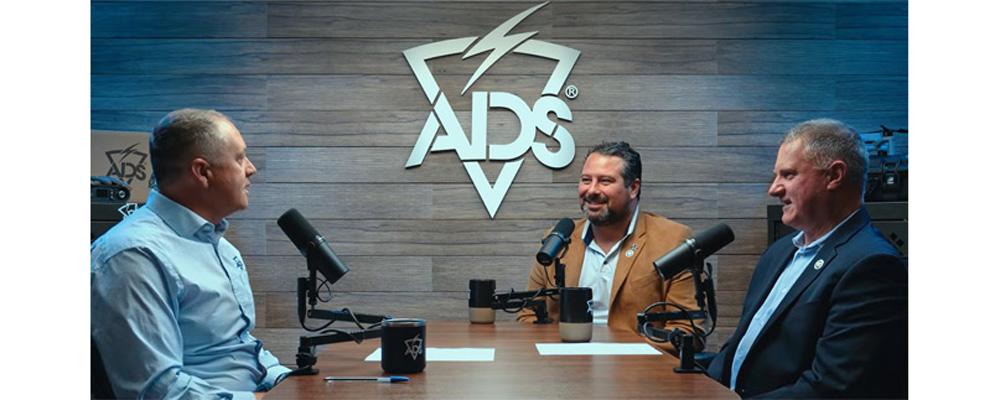
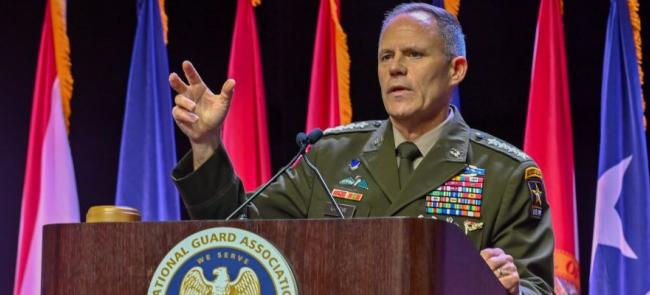
The NGAUS president discussed the association’s advocacy efforts, his evolution as a military and association leader, and how the Guard has changed since the first Persian Gulf War and 9/11 in a recent installment of From the Dive Shop podcast.
“The Guard really is community-based,” said retired Maj. Gen. Francis M. McGinn. “We have units that have three generations or more of serving in the same unit.”
With the Guard comprising about 40% of the combat power for the Army and 34% of the combat air power in the Air Force, McGinn noted the Guard’s primary mission remains to be the primary combat reserve of the Army and the Air Force.
“Our motto really is: If you’re prepared for combat, you’re prepared for anything,” McGinn said. “I had a front row seat to the evolution [of the Guard] to see where it was and couldn’t be prouder now,” the NGAUS president added.
“When I was in Iraq, I had a young E-4 working for me and he says, ‘Sir, can I ask you a question?’ I said, ‘Sure,’’ McGinn recalled. “He says, ‘Are you Guard, Reserve or Active Duty? I said, ‘Well, I’m in the Guard, and he goes, ‘Oh shit, I just lost a bet.’”
He said it took the exchange as backhanded compliment and a sign that the components were becoming indistinguishable.
The discussion touched on varied topics from how NGAUS advocates on both the national and state level to strengthen Guard readiness; the evolution of the Guard since Desert Storm and Sept. 11; and the changes McGinn has seen and experienced since he began his miliary career.
“My first uniform was the Gomer Pyle uniform where you tuck in the shirt,” he noted.
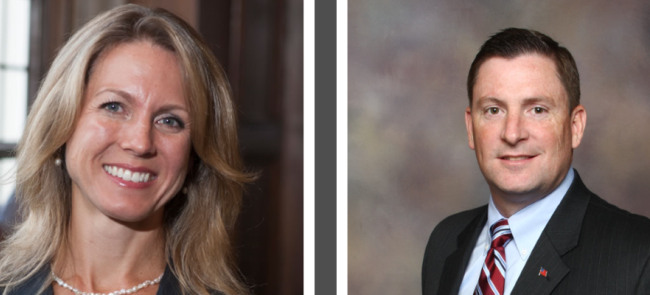
Russell Thompson, a business development manager with ADS Inc. and an elected member of the NGAUS Corporate Advisory Panel, joined host Patrick Shipp and McGinn on the podcast.
The CAP, says Thompson, advised the NGAUS board of directors on how industry can help the Guard from a product or a services standpoint. The CAP also is involved with the tradeshow at the NGAUS general conference.
McGinn highlighted the association offers more than advocacy through its professional development programs that are distinctly different from those available through the respective services.
The Capitol Summit, which is held twice a year, and select tracks at the annual conference are among the benefits of NGAUS.
—By Jennifer Hickey