then Add to Home Screen.
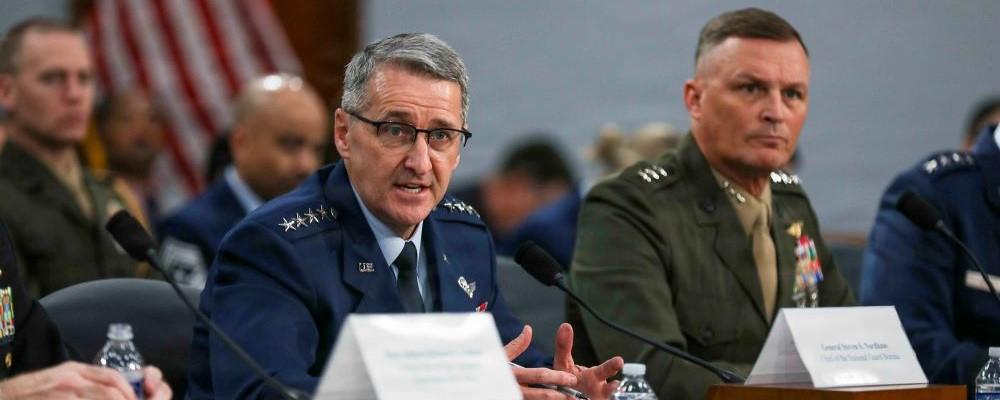
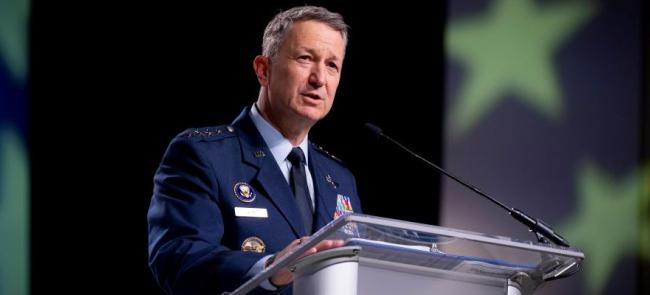
The chief of the National Guard Bureau underscored the Guard’s indispensable dual role in testimony Friday before the House Appropriations Committee Subcommittee on Defense.
“Our dual mission as the primary combat reserve of the Army and the Air Force, while also serving as the military first responders in domestic crises, is a challenge we accept,” Air Force Gen. Steve Nordhaus said. “2025 was a remarkable year for the National Guard, defined by the scale and simultaneity of our operations.”
When President Donald Trump called for action against Iran’s nuclear program last June, Guard aircrews contributed to Operation Midnight Hammer, the largest operational B-2 Spirit bomber strike in U.S. history.
This mission began not at a forward operating base, but in Missouri, where the Air Guard’s 131st Bomb Wing has spent years working side by side with the Air Force’s 509th Bomb Wing.
This year, Guardsmen have participated in Operation Epic Fury, flying strike missions against Iranian targets alongside joint force partners.
In January’s Operation Absolute Resolve, Guard forces were employed to counter narco-terrorism in the Western Hemisphere.
Meanwhile, back home, Guardsmen logged more than 2.4 million hours of direct support to American citizens in response to domestic crises, from natural disasters to civil emergencies.
Rep. Ken Calvert, R-Calif., the HAC-D chairman, praised the Guard’s counterdrug efforts in the homeland, which Nordhaus said were responsible for removing $15 billion in illicit narcotics from American communities in 2025.
Today, about 42,000 Guardsmen are currently engaged in the homeland and worldwide, supporting every combatant commander across the globe. Nordhaus said sustaining this operational tempo requires continued investment in facilities, equipment, medical readiness and people.
HAC-D plays a key role in sustaining that continued investment. It is the starting point for the full committee's consideration of the president’s fiscal spending request.
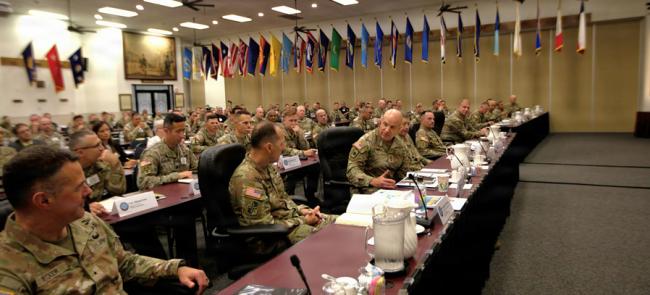
He testified alongside other reserve component chiefs. The CNGB emphasized that the Guard will remain a credible warfighting partner if it modernizes alongside the active component.
“To sustain strategic dominance, we must modernize concurrently with our services to aggressively outpace and overmatch tomorrow’s threats,” he said, calling for robust investments in flying hours, weapons systems sustainment, facilities maintenance, base operations support and the National Guard and Reserve Equipment Account.
Congress established NGREA in 1981 to address urgent, unfunded Guard and Reserve requirements not covered in the president’s budget.
Full video of the hearing is available here.
Nordhaus also asked Congress to address a funding gap created when Guard forces are called into state active-duty status to respond to domestic emergencies. Under current policy, reimbursement funds for those activations are returned to the Treasury rather than restored to the units that spent them on training and equipment.
“When we use these resources to serve our citizens in a state active-duty status, current policy sends reimbursement funds back to the Treasury,” he said. “We ask for your support in restoring that readiness directly back to our formations.”
Legislation, the Guarding Readiness Resources Act, in both the House and Senate would answer Nordhaus’ request.
One of the most persistent challenges facing the Guard is a personnel system that has not kept pace with the demands placed on the force.
Guard leaders have called on Congress to advance Duty Status Reform, a long-sought effort to simplify the patchwork of legal authorities under which Guardsmen are ordered to active duty, and to ensure that equal work is compensated with equal pay and benefits regardless of duty status.
DSR is the top NGAUS legislative priority in the fiscal 2027 legislative cycle.
Nordhaus testified today before the Senate Appropriations Committee Subcommittee on Defense.
—Includes reporting by the National Guard Bureau