then Add to Home Screen.
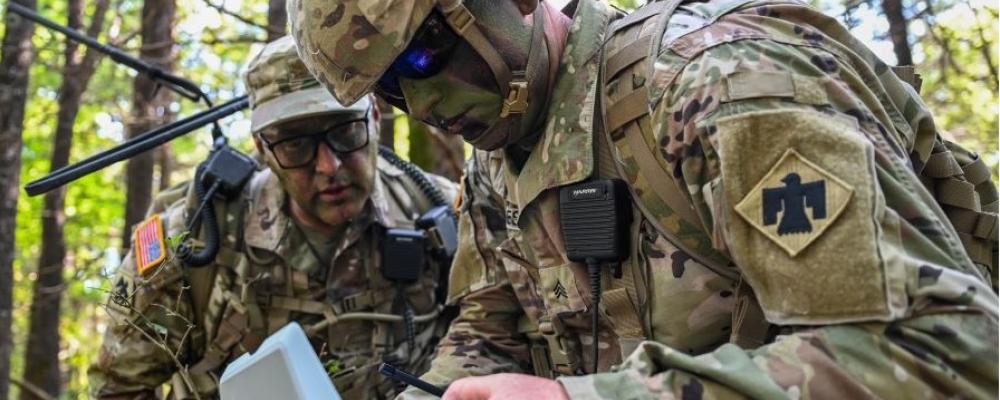
The Pentagon has published a practical handbook designed to help audiences across government, industry and academia better understand and counter the drone threat.
The Joint Interagency Task Force 401 developed the guide, Small Drones, Big Problems: A First Principles Approach to Countering-UAS, as part of its mission to synchronize counter-unmanned aircraft systems efforts across the U.S. military and federal interagency partners, according to a June 8 Defense Department release.
The handbook also establishes common vocabulary and incorporates the latest information about UAS, including lessons learned from operations in the Middle East and on battlefields in Europe.
It explains how adversaries can use drones, outlines the key components of a layered drone defense and examines the factors that enable successful counter-UAS operations.
“It is crucial to build a common foundation for counter-drone efforts as we work with the entire government and interagency partners to respond to this growing threat,” said Army Maj. Joe Amoroso, the deputy chief of strategic initiatives for JIATF 401.
“This guide shares vital first principles and direct feedback from warfighters employing [counter]-UAS systems so the entire community has the means, methods and concepts for countering the defining threat of our time.”
The handbook emphasizes a layered approach as the most effective defense against illicit drones, with a variety of tools available to counter threats.
It reinforces the importance of capabilities that go beyond technological solutions, including training for warfighters that equips them with the knowledge and permissions they need to respond to drone threats in real time.
Through this publication, JIATF 401 continues its mission to expand counter-UAS capability to warfighters at home and abroad.
"While there is no silver bullet to protect against drones, the threat can be mitigated if we are proactive, work with partners across the government and build a layered defense," said Army Brig. Gen. Matt Ross, the task force director.
“We have faced novel challenges before, and we should not be intimidated by this one,” Ross added. “We should lean in and take every possible step to prepare ourselves to dominate on the modern battlefield.”
Small Drones, Big Problems offers an example of one of those “novel challenges” — the emergence of German U-boats in 1939.
It was a “happy time” for Nazi Germany because the Allies did not yet know how to react to the new threat to shipping.
“But the ‘happy time’ didn’t last forever,” the handbook says in the first chapter. “British and American ships learned to adapt to the threat by implementing a convoy system to protect shipping lines, using escort ships, and developing new technologies like sonar, radar, and depth charges.”
The handbook explains that technology in warfare has always evolved, but weapons alone don’t win wars.
“Learning militaries adapt and innovate, repurposing existing defenses and building new ones to address vulnerabilities exploited by drones,” it says. “They change how they think about drones and how they fight.”
—Based on a Defense Department release