then Add to Home Screen.
NGAUS is hosting a Mental Health Symposium focused on the unique mental health challenges facing National Guard members and their families.
The July 13 event at the National Guard Memorial, the NGAUS headquarters in Washington, D.C., brings together congressional offices, VSOs/MSOs, Guard stakeholders, VA representatives, state-level support leaders, and industry/community partners to discuss where current systems fall short and identify solutions to those inefficiencies.
Today, Guard members are asked to balance a growing operational tempo at home and overseas, their civilian careers, and education and family responsibilities.
Unlike their active-duty counterparts, Guardsmen often lack established sustained support systems that are available on active-duty installations.
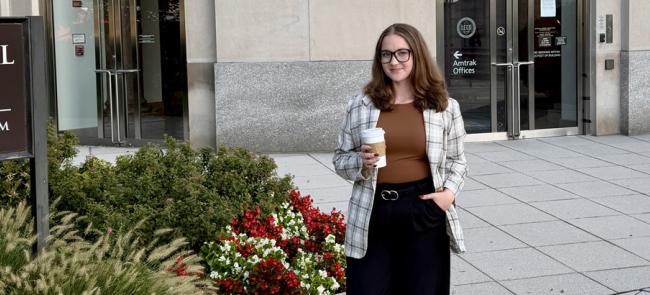
“The Symposium brings together topic experts and decision-makers for a discussion about Guardsmen’s mental health,” said Alex Scaffo, a former New Jersey Army Guardsman, who helps NGAUS with veteran’s issues as a HillVets fellow.
“There is a huge gap in understanding the stressors and issues specific to Guardsmen versus the active-duty component,” added Jon Eisberg, NGAUS Vice President, Government Affairs. “This leads to their issues not being handled as well as they should be. The structure is not there to support Guardsmen as they transfer back into civilian life.”
Scaffo said the forum will focus on the realities of Guard service and the need for policies that recognize the unique dynamics of service in the reserve component.
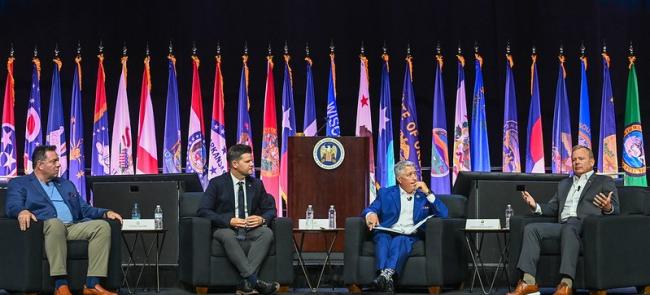
The symposium will be divided into three panel discussions:
The first panel, “The Guard Reality — Serving in Two Worlds,” will examine the challenges of balancing military and civilian responsibilities, as well as the often-overlooked difficulties of reintegration following deployments.
Discussions will explore the loss of military structure and peer support after returning home, delayed effects of operational stress and the cumulative impact of repeatedly moving between two professional worlds.
The second panel, “Gaps in the System — Policy, Access, and Accountability,” addresses barriers Guard members encounter when seeking mental health care. Speakers will examine shortcomings in current laws and eligibility requirements, uneven access to behavioral health services across states and the complex division of responsibilities between state and federal agencies.
The discussion will also explore opportunities for Congress to improve access to care and clarify accountability for delivering mental health services to National Guard personnel.
The symposium’s final panel, “Building Better Support Systems — Guard-Focused Support Models and Emerging Solutions,” highlights innovative programs designed specifically for the Guard. Participants will discuss community partnerships, emerging technologies and other initiatives aimed at expanding access to care while recognizing the realities of part-time military service.
Rather than adapting programs developed for the active component, panelists will emphasize Guard-centric approaches that provide consistent support before, during and after military service.
The symposium will conclude with remarks from members of Congress highlighting the federal government’s role in strengthening behavioral health resources for the National Guard. A no-host happy hour will follow.
Panelists include representatives from Enlisted Association of the National Guard of the United States, Department of Veterans Affairs, National Guard Bureau, congressional staff, Maryland J9, Cabana, Life Score and August Interactive. RAND’s Terri Tanielian will serve as a panel moderator.
Guest speakers include Reps. Zach Nunn, R-Iowa and Sheri Biggs, R-S.C.
As the Guard’s operational mission continues to expand, NGAUS hopes the symposium will inform future legislative priorities and strengthen collaboration among Congress, the National Guard, federal agencies and community partners.
The goal is to advance practical, Guard-focused solutions that improve readiness while supporting the long-term health and resilience of Guardsmen.
“Improving mental health outcomes will require more than increased awareness,” said Eisberg. “Sustained legislative action will be necessary to modernize policies, eliminate gaps in care and ensure Guard members have reliable access to behavioral health resources regardless of where they serve.”
RSVP using the event registration form here. Please reach out to Alexander Scaffo at [email protected], with any questions or concerns. Learn More.
—By Michael Metz