then Add to Home Screen.
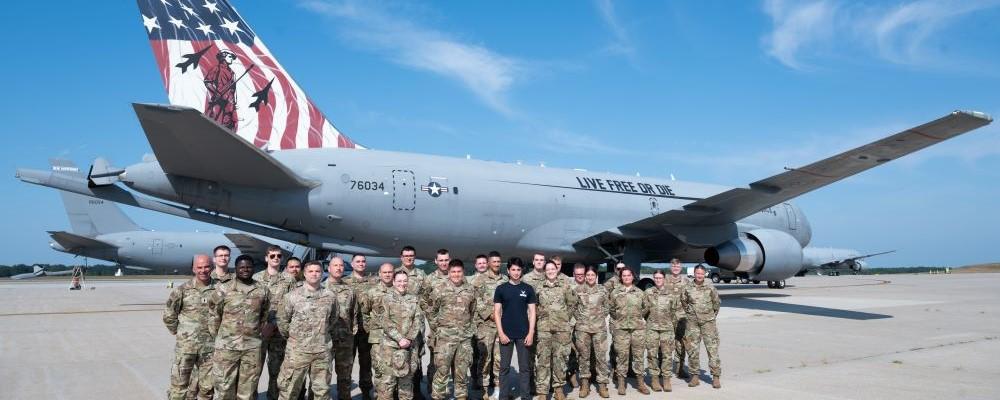
The Air Force has reached an agreement with Boeing to speed delivery of key KC-46 Pegasus tanker upgrades across the fleet, including the aircraft’s enhanced vision system.
Only one Air National Guard wing — New Hampshire’s 157th Air Refueling Wing — operates the new tanker, though units in Michigan and Tennessee are slated to receive it in the years ahead.
The other 14 Air Guard air refueling wings still fly the KC-135R Stratotanker, which has been in service for nearly 70 years. Replacing those aircraft with the KC-46 remains a top NGAUS legislative priority.
The Air Guard provides 37% of the Air Force’s refueling capacity yet is only programmed to receive 19% of the Air Force KC-46 fleet.
The “multipronged” plan announced May 12 is the latest effort to fix critical issues with the new tanker that Air Force senior leaders have said must be resolved before they will agree to a new contract to buy 75 more.
“The KC-46 is a cornerstone of U.S. power projection, and we are working proactively with Boeing to ensure it is always ready to deliver,” said Air Force Secretary Troy Meink. “With this multipronged approach, we are improving aircraft availability, speeding delivery of critical new capabilities and strengthening overall fleet supportability.”
Combined with the Air Force’s investment in the president’s fiscal 2027 budget request, the plan is expected to increase KC-46 availability by more than 20% by 2030, officials said.
A major element of the plan is to “accelerate” the fielding of the new Remote Vision System 2.0 — the camera and video system boom operators in the KC-46 use to refuel other aircraft.
The camera system has been a major issue since the new tanker entered Air Force service in 2019. In certain conditions, the boom operator, who sits near the front of the aircraft, may not be able to see the receptacle clearly with the RVS, risking damage to the receiving plane if the boom scrapes against that aircraft.
This is not an issue in the KC-135, as the boom operator works from the back of the tanker, only a few feet from the plane taking on fuel.
RVS 2.0 will be installed on existing KC-46s as they come in for depot-level maintenance beginning in 2028, according to the statement.
Another prong of the plan includes a five-year “performance-based logistics agreement” to better support the aerial-refueling subsystem and other key components.
“Reliability and parts availability of the aerial-refueling subsystem collectively represent the largest detractors of KC-46 availability,” the announcement states.
—By John Goheen