then Add to Home Screen.
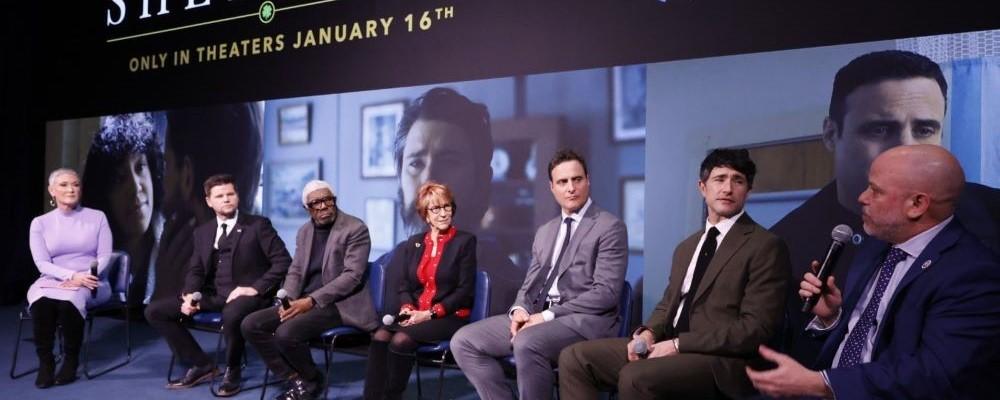
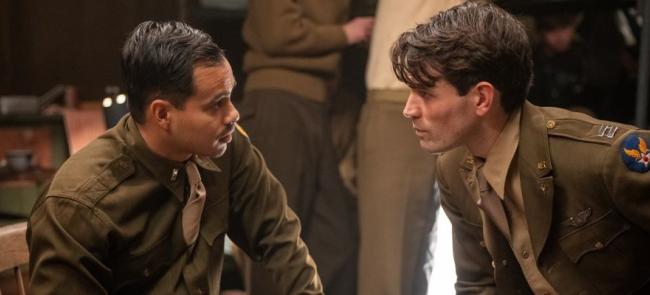
After a screening of SHEEPDOG last week in Washington, D.C., the NGAUS chief of staff joined a panel comprised of cast members and a representative of the Department of Veterans Affairs to discuss the movie’s depiction of veteran post-traumatic growth.
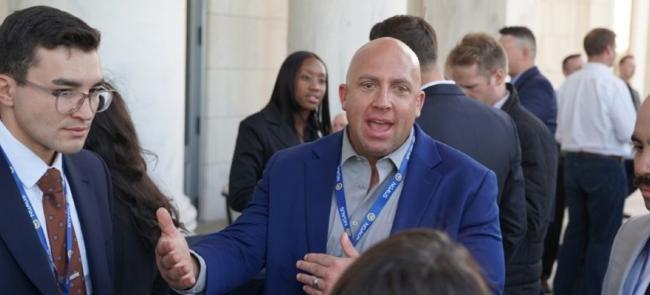
“I’ll tell you, I had tears the first time I watched it when I was on a laptop and tears tonight when I was sitting [in the audience],” said retired Col. Eric Leckel, who deployed twice to Iraq as a member of the Wisconsin Army National Guard.
He said the movie’s tense opening scene reflected situations he experienced upon returning home.
In addition to his time in Iraq, Leckel recently served as the chief of staff, Combined Joint Task Force–Horn of Africa in support of Operation Enduring Freedom.
Moderator Jennifer Griffin, national security correspondent for Fox News, asked Leckel how the post-deployment stressors might be different for Guardsmen.
“One thing with the National Guard is that when we come back from deployment, we might be coming from theater, and 10 to 14 days later, you’re back into your civilian life,” said Leckel.
A native of northern Wisconsin, he said many from the unit he commanded in the first year in Iraq lived two hours from a VA facility.
“We just don’t have the infrastructure in the National Guard,” he stressed. “In active duty, you go back to a post with all the behavioral health and other services.”
Additionally, in rural America, many of the psychiatrists or psychologists are not equipped to talk to men or women who’ve recently experienced combat.
Representatives of the VA, Small Business Administration and various veteran and military service organizations, and the press attended the premiere co-hosted by NGAUS and the Code of Support Foundation at the Navy Memorial in Washington, D.C.
The dedication to authenticity is tied to the film’s roots, said producer/director Steven Grayhm.
The seminal moment came in 2011 during a ride in a tow truck on an hours-long ride back to Los Angeles.
Without prompting, the driver began telling Grayhm about the service-related medications he was taking, and the difficulties he was experiencing in his marriage and financially.
“He kept saying, ‘I can’t believe I'm telling you this. I've never told my wife, I've never told a therapist,’” Grayhm said.
Grayhm believed there were other veterans in the same situation and he felt a “sense of responsibility” to tell their story.
The 14-year path to production took place entirely outside of the Hollywood system and involved hundreds of interviews nationwide with veterans, Gold Star families, social workers and trauma therapists.
“I was able to tell this story authentically and then surround myself with people where I had the final say,” Grayhm added.
The engagement with those who know combat or post-traumatic stress firsthand, Grayhm also hired Gold Star family members and veterans to work on the production.
Cast members also brought personal ties to the film.
Oscar-nominee Virginia Madsen, who plays the VA trauma specialist, is a Gold Star family member.
In depicting a Vietnam veteran in SHEEPDOG, Vondie Curtis-Hall relied on his personal experience.
“I had many friends who left high school and enlisted. Half of them came back and half of them didn't. The ones that came back were all damaged in some sort of way, emotionally, physically or mentally,” he told the audience. “I really felt I have the ability to pay homage to my friends, the people that I know.”
Dr. Lynda Davis, Chief Veterans Experience Officer at the VA, said “every single role in that movie is me.”
Davis served in the Army Signal Corps officer, a clinician at the VA, and as deputy undersecretary of defense for military community and family policy.
She also served as executive director for Tragedy Assistance Program for Survivors. TAPS was founded by Bonnie Carroll, a 16-year veteran of the Air Guard, after her husband Alaska Army Guard Brig. Gen. Tom Carroll was killed in a plane crash.
“What you have captured is the reason why those of us who are here, why we're in this, is because you never, ever leave a buddy behind,” said Davis.
The film opened nationwide Jan. 16.
The producers have partnered with VetTix and First Tix to provide discounted tickets to veterans, first responders and their families.
You can “pay it forward” by purchasing tickets here.
—By Jennifer Hickey