then Add to Home Screen.
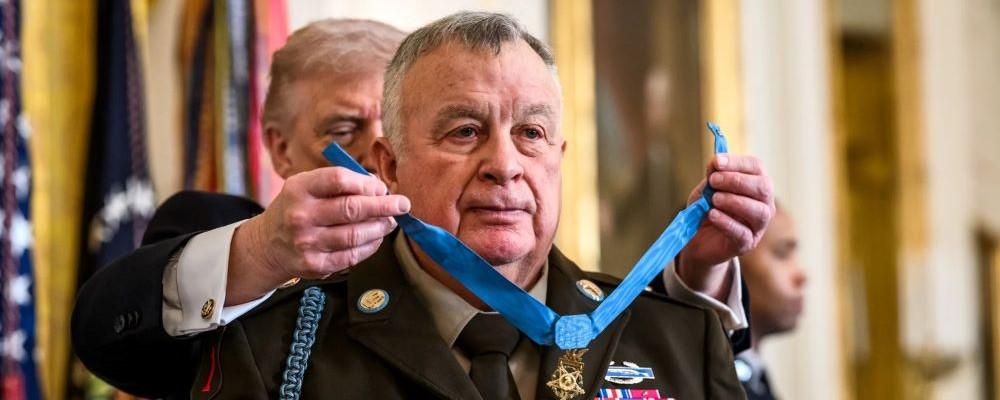
A retired Michigan Army National command sergeant major received the nation’s highest award for valor in combat from President Donald Trump on Monday at the White House.
Retired Command Sgt. Maj. Terry Richardson was recognized with the Medal of Honor for saving the lives of 85 Soldiers nearly 60 years ago while wounded during a firefight in then-South Vietnam.
At the time, he was a draftee serving as squad leader in the Army’s 1st Infantry Division. He was honorably discharged from active duty less than a year later.
Richardson joined the Michigan Army Guard in 1978, serving 30 years before retiring in 2008 as the post command sergeant major of the Camp Grayling Joint Maneuver Center in Northern Michigan.
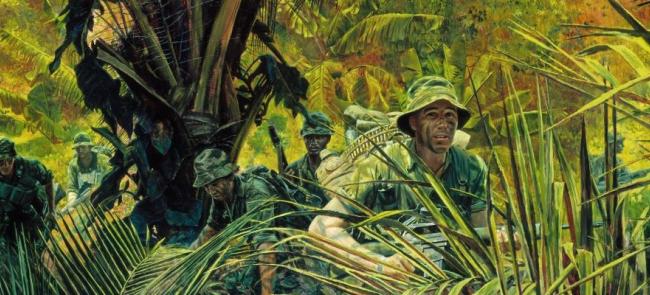
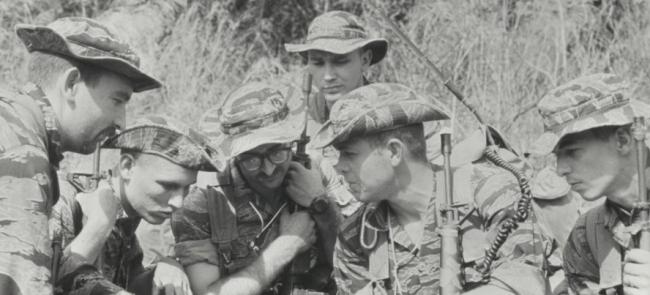
But Monday’s event focused on his gallantry during a reconnaissance mission Sept. 14, 1968, between Loc Ninh and the Cambodian border.
Richardson’s unit “was engaged by intense automatic weapons and small-arms fire from a well-entrenched North Vietnamese Army battalion,” according to his Army biography.
His company attempted to advance along with several other units from the 1st Infantry Division.
“Richardson maneuvered through a hail of hostile rounds and deployed his men into defensive positions while directing their suppressive fire. During the attack, he dragged three wounded soldiers back to safety,” the Army said.
Moving through gunfire, he rescued each of the wounded Soldiers, marking the nearest enemy machine gun bunkers with smoke grenades so they could be targeted by air strikes.
Realizing his surrounded unit would be overrun without air strikes, Richardson sneaked up Hill 222 and, while hiding in an irrigation ditch, directed U.S. fighter bombers as they dropped their ordnance on enemy positions, the Army said.
An hour into his efforts, Richardson was shot in the leg by a sniper. Ignoring the pain, he stayed on the radio for seven more hours, calling in more than 30 air strikes close to his position and saving 85 American lives, according to accounts.
“His efforts proved instrumental in saving his company and breaking the North Vietnamese grip on Hill 222,” the Army said.
Richardson was found alive by his Soldiers after the enemy had fled. He declined medical evacuation to stay with his troops.
He was originally awarded with a Bronze Star for his actions, which chafed those he saved. They thought his actions deserved higher recognition, but Richardson waved off any effort at an upgrade, even though his citation incorrectly said he saved two lives and not 85.
“I was just doing my job,” he reportedly said.
Richardson relented upon his retirement from military service.
The effort led by those who were with him on Hill 222 took several years but never wavered. It culminated when Secretary of War Pete Hegseth approved the new award late last year.
He said he learned of the decision from those involved in the push.
Still, Richardson said he “fell out of his chair” Feb. 2 when he received a call from the president, according to published reports.
“He said, ‘I read your story,’” Richardson recalled. “And he said, ‘I’ll tell you right now … I probably would never do what you did. When I read it, I knew I wanted to talk to you.’”
He said the call with Trump lasted maybe 10 minutes, and it was “quite an honor.”
Also receiving the Medal of Honor on Monday were Army Staff Sgt. Michael Otis for heroism in Afghanistan in 2013 and Master Sgt. Roderick Edmonds for refusing to identify Jewish-American prisoners at Stalag IXA in Ziegenhain, Germany, in 1945.
Both received the honor posthumously.
At least 141 other recipients of the Medal of Honor have Guard service. Their names are in the Medal of Honor Alcove in the National Guard Memorial, the NGAUS headquarters in Washington, D.C., and on the National Guard Educational Foundation website.
—By John Goheen