then Add to Home Screen.
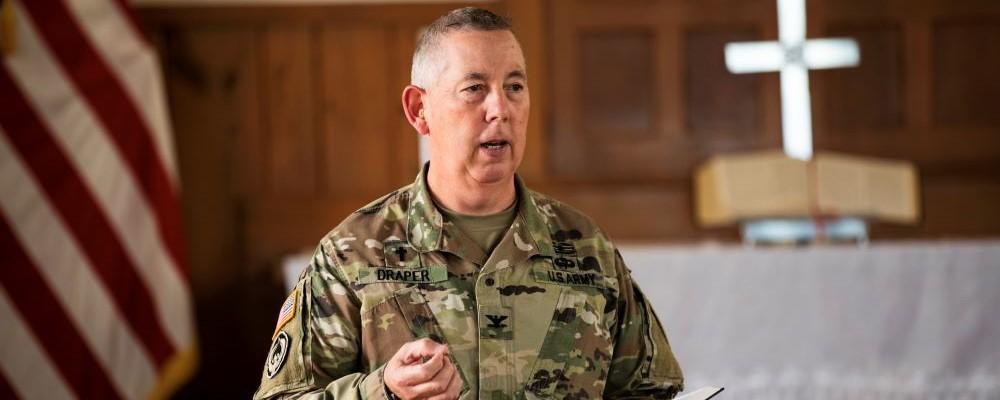
Military chaplains will stop wearing rank in uniform, Secretary of War Pete Hegseth announced last Tuesday as part of two significant changes affecting the Chaplain Corps.
Instead, they will wear symbols reflecting their religious affiliation.
In a memo unveiled alongside a video message, Hegseth said chaplains will retain their commissioned officer rank but will no longer display it.
The change, he said, reflects the “duality” of the role and underscores that chaplains are “first and foremost” religious leaders.
“A chaplain is first a chaplain and second an officer,” Hegseth said, calling the move a visual affirmation of that priority. He added that chaplains should be viewed “among the highest ranks because of their divine calling.”
Hegseth also argued the change could make chaplains more approachable to service members by reducing hesitation about seeking help from someone visibly ranked as a superior.
There are more than 3,000 chaplains in the U.S. military, according to Pentagon figures.
Military chaplains — commissioned officers who serve as religious leaders and counselors — have been part of the armed forces since 1775, when George Washington created the Chaplain Corps as an exclusively Protestant institution.
Catholic and Jewish chaplains were added in the mid-19th century, followed by the first Muslim chaplain in 1994 and the first Buddhist chaplain in 2008.
The announcement also included a change to how the Pentagon categorizes religious affiliation.
Hegseth said the U.S. military will reduce its list of recognized faith codes from more than 200 to 31, calling the current system “impractical and unusable.” He said most codes were rarely used and that a small number accounted for most service members.
“A streamlined system,” he said, would better support chaplains in serving troops in line with their faith traditions. The Pentagon did not immediately provide details on the new list of faith codes.
He criticized previous administrations for diluting the role through “political correctness and secular humanism,” reducing chaplains to little more than therapists.
“A warfighter needs more than a coping mechanism,” Hegseth said. “They need conviction. They need a shepherd.”
Hegseth added that the Pentagon was not stopping with the pair of changes.
"These two reforms are big progress, but we're not even close to being done,” he said. “These are the first steps toward restoring the esteemed position of chaplain as moral anchors of our fighting force."
—By Michael Metz