then Add to Home Screen.

Two members of the House Armed Services Committee last week introduced legislation aimed at reducing the complex, confusing and unequal system of more than 30 National Guard and Reserve duty statuses to four broad categories..
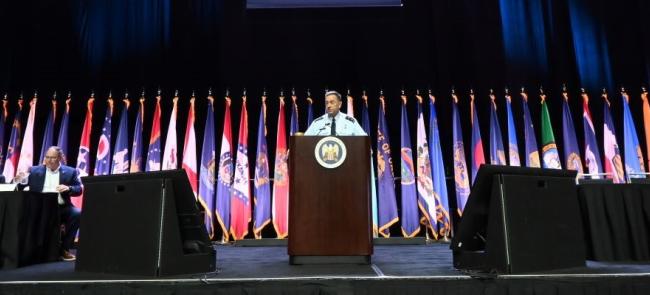
Reps. Gil Cisneros, D-Calif., and Jack Bergman, R-Mich., touted the Duty Status Reform Act at a press conference Thursday on Capitol Hill.
“We owe it to our service members to deliver this much-needed change and ensure they are receiving equitable pay and benefits,” said Cisneros, a Navy veteran and former under secretary of defense for personnel and readiness.
“Having worked on this issue during my time at the Pentagon, I learned about the complexity of the current duty status system and how it hurts our readiness and quality of life for service members,” he added.
“The Duty Status Reform Act is a commonsense win for our Reserve and National Guard service members,” said Bergman, a retired Marine Corps lieutenant general who spent time in the Army Guard early in his military career. “It cuts through decades of red tape to make sure those who serve get consistent benefits, clear orders and the support they’ve earned.”
The bill is co-sponsored by Reps. Ted Lieu, D-Calif., and Sam Graves, R-Mo.
It is the number one NGAUS legislative priority, and retired Maj. Gen. Francis M. McGinn, the association's president, who took part in the press conference.
“This bill impacts nearly 300 laws, saves taxpayer dollars and requires no additional Congressional Budget Office scoring,” he said. “We are grateful to Congressmen Cisneros and Bergman for leading this charge and we look forward to working with Congress to accomplish this much needed reform.”
The existing system, shaped by decades of legislative patchwork, often results in unequal benefits for similar assignments, disruptions in pay and health care, and administrative burdens for commanders.
“That the system no longer matched how the Guard and Reserve are used has been known for many years, but it has taken a while to develop the comprehensive legislative fix required,” McGinn said.
Congress first directed the U.S. military to address the situation in the fiscal 2018 National Defense Authorization Act. The Duty Status Reform Act is a product of countless hours of work by Pentagon officials in consultation with Guard and Reserve leaders nationwide, McGinn said.
“When statuses are clear, pay is timely, health care coverage is continuous and commanders can focus on the mission instead of paperwork,” he added. “That will be the result of this legislation.”
The legislation also has the early support of the Enlisted Association of the National Guard of the United States, Reserve Organization of America and Association and Military Officers Association of America.
The four proposed duty status categories in the act are:
• Category I: Contingency Duty that involves missions such as military operations and national emergencies such as natural disasters. This also covers post-deployment activities.
• Category II: Training and Support activities that include required training, administrative assignments and other support missions.
• Category III: Reserve Component Duty Blocks of time that involve partial-day duty and are dedicated to readiness training and support to prepare individuals and units to be ready for future use and mobilization. This category would include training periods, flight training, administrative activities, and support activities such as funeral honors support.
• Category IV: Remote Assignments that involve online learning and individually assigned duties that are completed virtually.
Video of the press conference can be found here.
—By Michael Metz