then Add to Home Screen.
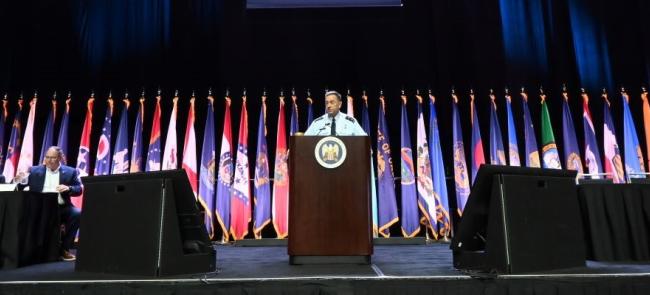
For the second consecutive year, the NGAUS general conference featured a range of voices tackling issues relevant to National Guard leaders at every echelon.
The opening panel looked at how the future of asymmetric warfare is and will continue to impact the National Guard.
“The nature of war hasn't changed. It's the character of war that's changing very rapidly. War is still a violent, very political, fundamentally human endeavor,” said retired Air Force Lt. Gen. David Julazadeh, the chief operating officer of Business Executives for National Security.
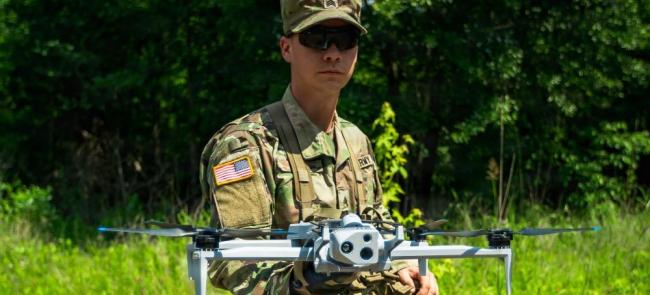
From Ukraine and Iran to recent attacks on critical infrastructure, the battlefield is evolving at a fast pace. The age of inexpensive drones, an increasingly transparent battlefield and the rise of non-state actors underscore the unique capacity of the Guard.
“When I think of asymmetric warfare, I think of the necessity to change. That's both offense and defense and in terms of projecting capabilities but also protecting our society. I think the National Guard is uniquely asymmetric,” said Army Brig. Gen. Chad Bridges, the adjutant general of the Arkansas. He noted the Guard is present in 3,000 communities across the nation.
Air Force Maj. Gen. Mark Morrell, adjutant general of South Dakota, and Laura Kupe, deputy chief program officer at BENS, also added their expertise to the discussion.
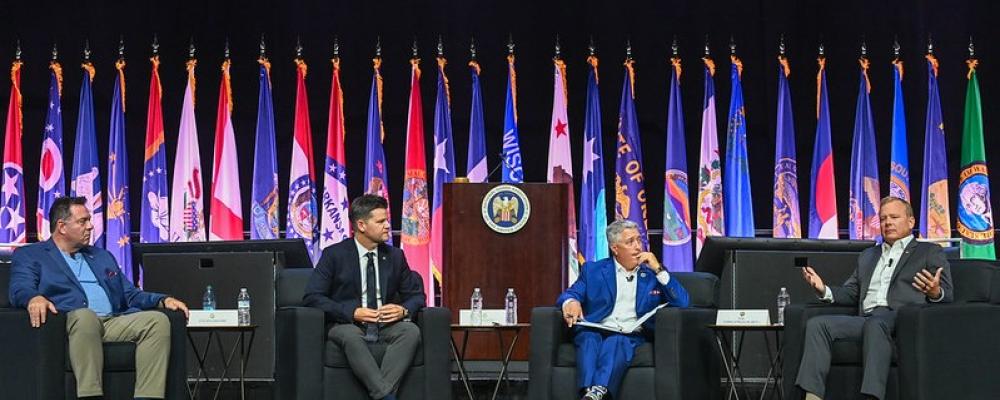
The second panel continued efforts by NGAUS to elevate the issue of mental health.
“PTS, as we all know, is a physiological and psychological response to trauma. Post-traumatic growth on the other hand is the positive change that can occur both psychologically and even in our bodies and physically and both can happen at the same time,” said Steven Grayhm, the producer, director and lead actor of the movie Sheepdog.
Retired Air Force Col. Chris Stricklin, a former Thunderbirds pilot and mental health advocate who has spent his years since the service helping veterans pursue post-traumatic growth, and Rich Ganley, the founder of Positive Impact Alliance, which supports the total well-being of first responders.
The powerful discussion was moderated by Jon Eisberg, the NGAUS vice president.
—By Jennifer Hickey
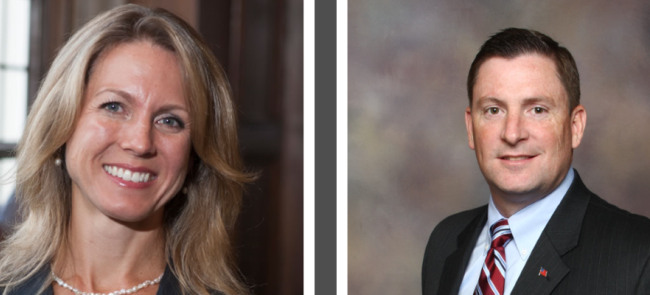
The third panel featured retired Maj. Heather “Lucky” Penney and retired Marine Corps Lt. Col. Robert Darling to revisit the Sept. 11, 2001, terrorist attacks from their unique vantage points.
PHOTO (from left) Ganley, Grayhm, Eisberg and Stricklin