then Add to Home Screen.
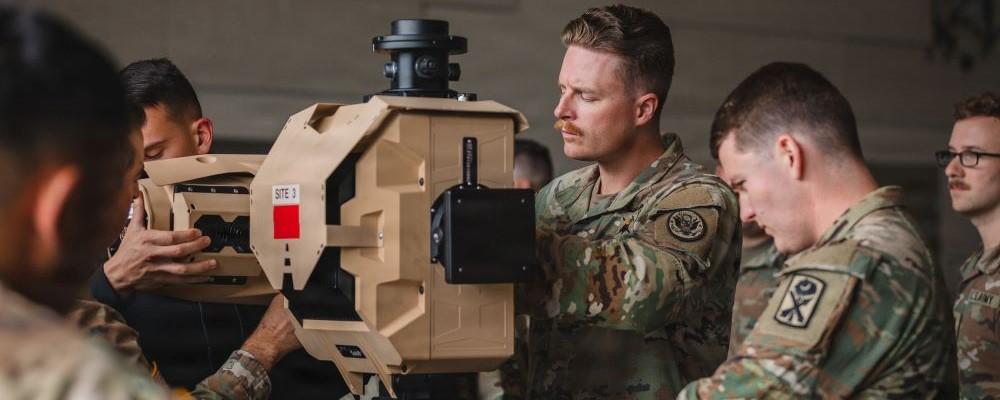
More than 40 National Guardsmen from across the country attended a counter-unmanned aircraft systems master operator course Sept. 14-25 at Camp Murray and Joint Base Lewis-McChord, Washington.
The 10-day course brought together personnel from civil support teams, air defense artillery units and other organizations.
The course was the latest step in the Washington National Guard’s effort to expand counter-UAS expertise and strengthen coordination among military, law enforcement and public safety organizations.
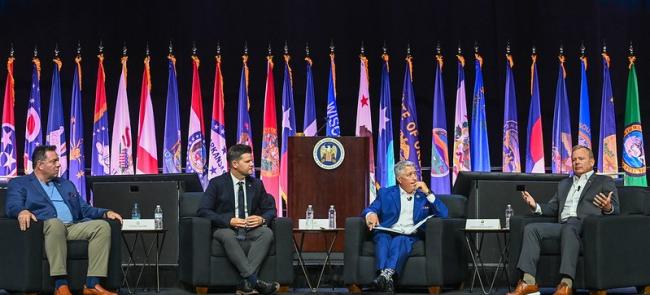
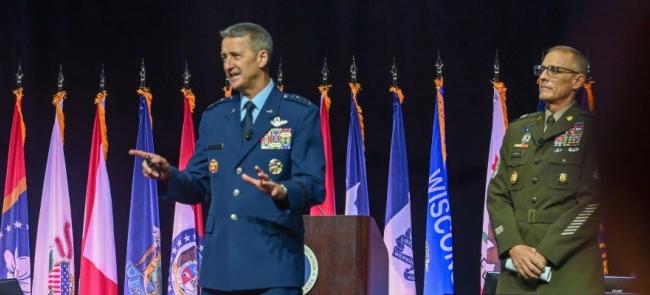
Since hosting a counter-UAS summit in November 2025, the Washington Guard has offered foundational instruction, conducted field demonstrations and provided initial training on newly fielded mobile systems developed by Anduril Industries, a leading manufacturer of advanced autonomous military drones.
The September course built on those efforts by teaching operators to assemble, calibrate, troubleshoot and employ the systems in increasingly complex scenarios.
“This course is about building a trained, capable force that can integrate counter-UAS systems with our military, law enforcement and public safety partners,” said Lt. Col. Wes Watson, director of the Washington Guard commander’s action group for counter-UAS operations.
“By developing master operators who understand the equipment, the threat and the operating environment, we are building the foundation needed to support a coordinated response to unmanned aircraft incidents when authorized to do so,” Watson added.
Training combined classroom instruction, equipment assembly, system emplacement and live range operations. Participants learned to establish the system network, calibrate sensors and use the Lattice software platform to detect and track unmanned aircraft and support response operations.
Anduril instructors led the technical portions of the course, while Guard and Joint Interagency Task Force personnel managed range operations. Students learned the equipment in a controlled environment before employing the complete system in operational scenarios.
“The importance of this course is learning how to use the platforms we currently have, gaining proficiency and familiarization and validating the equipment,” said Sgt. 1st Class William Bean, communications team chief for the Washington Guard’s 10th Civil Support Team and the training’s noncommissioned officer in charge.
Students reviewed unmanned aircraft threats and the counter-UAS process, including detection, tracking, identification and response. They then received hands-on instruction on each component of the mobile platform.
Working in teams, students assembled the Wisp and Pulsar systems and the Long Range Camera Tower. Instructors emphasized safety, proper cabling, equipment standards and common failure points before students performed each process independently.
“We had three mobile systems here with different hardware and software capabilities designed to identify, track and locate specific unmanned aircraft systems,” Bean said.
Students advanced from assembling individual components to connecting them as an integrated system. In a student-led exercise, teams moved the equipment from its packed configuration to full mission capability.
Over five days on the range, students applied their skills against varied unmanned aircraft and flight patterns. Anduril personnel served as advisers, answering technical questions and assisting with troubleshooting.
Participants then completed a written exam and hands-on evaluation. The practical assessment required them to build the system, establish its network, calibrate the equipment and operate the software platform. Those who met the standards were certified as trained operators.
The course advanced Washington’s broader effort to build counter-UAS expertise in support of homeland defense, major-event security and critical infrastructure protection.
—Reported by Joseph Siemandel
Washington National Guard