then Add to Home Screen.

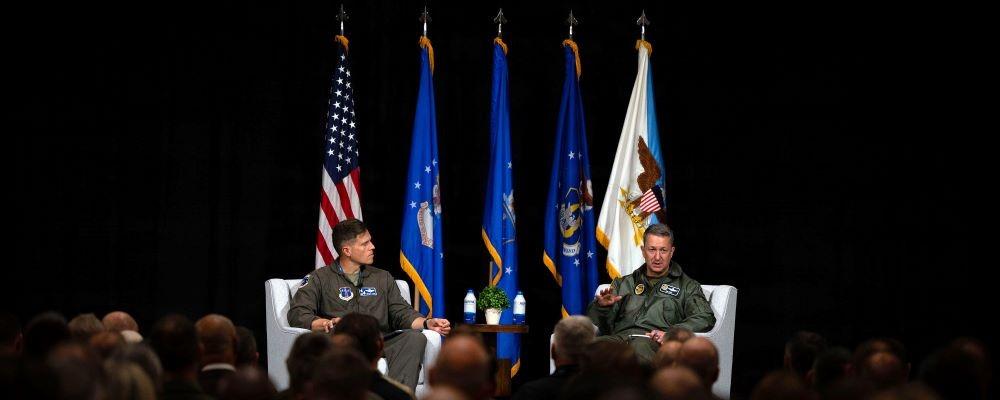
The chairman of the Joint Chiefs of Staff returned to a familiar place last week with a message: Leadership, innovation and the willingness to challenge conventional thinking remain essential to building and maintaining America’s combat advantage.
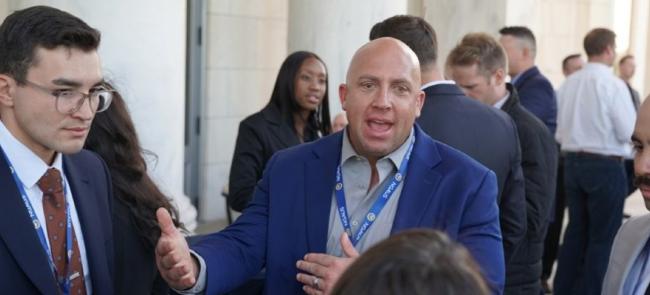
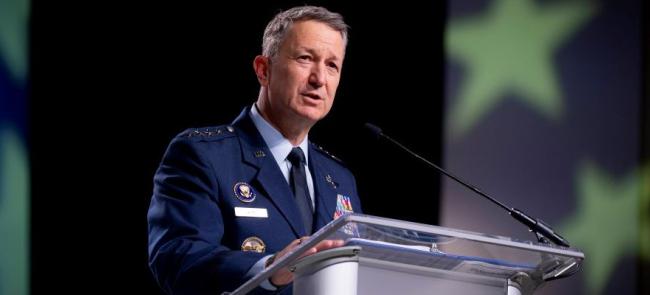
Air Force Gen. Dan Caine addressed military leaders, tacticians and industry representatives at the Air Reserve Component Weapons and Tactics and Domestic Capability Priorities Conference in Tucson, Arizona.
He also reflected on his early experiences at the Air National Guard Air Force Reserve Command Test Center, which hosted the conference, and how they helped shape his career path.
“When I was a young captain trying to figure out which direction was north and not go blind, it was here where I learned how to be a class act,” Caine said.
He added that his time as an Air Guard member at the AATC from 2003 to 2005 reinforced “the value of tacticians and forcing up what the combat forces really need,” and not exclusively rely on senior leadership input.
AATC helps keep Air Guard and Air Force Reserve in the fight by developing cost-effective solutions to upgrade aging aircraft and other equipment.
An example is the role it played in testing and integrating the advanced APG-83 AESA radar into older F-16 fighters.
WEPTAC/DCP annually brings together Air Guard and Air Force Reserve warfighters to identify critical capability shortfalls for reserve-component weapons systems, missions and training priorities.
Caine discussed one of his crucial duties as the military’s top officer, and how gatherings such as the conference can bring about significant changes.
“[We need] to get as creative and innovative and inspired as we can, and working with all of you and in venues like this to try to see what warfighting is going to look like out there in the future and building upon the bottom-up capability that you advocate to the joint force,” he said.
Caine emphasized that delivering these capabilities requires even closer coordination among military leaders, warfighters and private industry.
His message to those groups was straightforward.
“If you see an issue, get people together and get in the same room. Period,” Caine said. “You have a responsibility to move with speed and intent to solve problems – instead of just admiring them.”
But the technological wonders available to the warfighter are pointless without solid leadership, Caine said.
Drawing on his experiences as a young Air Guardsman, Caine encouraged the audience to embrace new challenges and opportunities, emphasizing how mentorship and lessons learned helped shape his approach to leadership.
“I had leaders who encouraged me to go try different things,” Caine said, “and it was the relationships, the contacts, the insights and wisdom that was poured into me by somebody in every single job — whether it was here at the test center or at the [Central Intelligence] Agency.”
In the end, it led him the the path that he finds himself today.
“The range of those experiences I think really helps me out in this place I find myself in right now,” he said, pointing out to the younger officers at the conference. “I was you, so don’t think that you may not end up someday sitting up here on this stage.”
As warfare evolves, he urged today’s tacticians to become proficient in emerging technologies without losing mastery of fundamental warfighting skills.
“It’s this tribe right here — this WEPTAC — that is going to help the joint force do that,” Caine said. “Just keep grinding at it, and be aggressive about it, and share knowledge where you can, and move quickly to expand the combat capability that we need.”
—Reported by Master Sgt. Erich Smith
National Guard Bureau