A sampling of advocacy in the nation's capital and other key locations, including highlights of meetings and events on Capitol Hill and at the Pentagon.
The strategic future of NGAUS will be the major topic of conversation this weekend when the association’s board of directors meets for the first time this year.
New aircraft and vehicles for the National Guard not included in the original budget request were in the fiscal 2026 defense appropriations President Donald Trump signed Feb. 3.
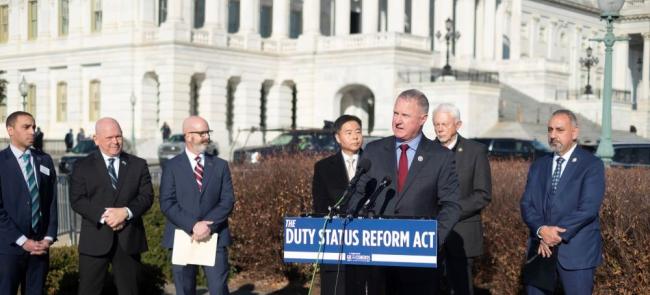
Two members of the House Armed Services Committee last week introduced legislation aimed at reducing the complex, confusing and unequal system of more than 30 National Guard and Reserve duty statuses to four broad categories.
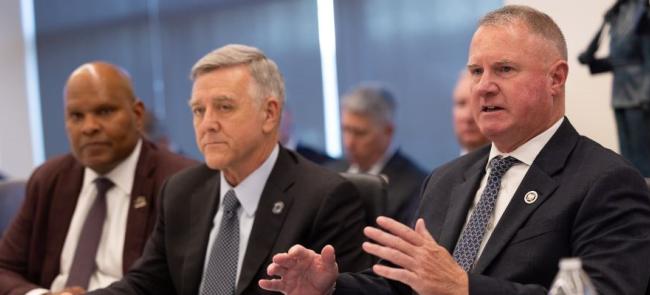
The longest government shutdown in U.S. history should soon be over, but the damage to the National Guard will likely continue for a while. That was the message retired Maj. Gen. Francis M. McGinn, the NGAUS president, delivered during a media roundtable Monday with three other military association leaders at the Air and Space Forces Association in Arlington, Virginia.
NGAUS and three other National Guard and Reserve advocacy groups have made another urgent appeal to congressional leaders to end the government shutdown or at least take action to pay troops on duty during the impasse.
NGAUS is leading the charge of National Guard and Reserve associations asking Congress to help pay service members on duty during the government shutdown, which is now in its second week.
The Air National Guard lost a fighter unit Sept. 23 when the Maryland National Guard formally ended the A-10C Thunderbolt II mission at Warfield Air National Guard Base outside of Baltimore.
WASHINGTON, D.C. (Aug. 28, 2025) — The voice of current and former National Guard officers nationwide is applauding a Senate bill that would ensure that every member of the National Guard and Reserves has access to health care.
Introduced by Sen. Tammy Baldwin, D-Wis., the Healthcare for Our Troops Act (S. 2575) would offer premium-free, zero-cost-share medical coverage to every member of the Guard and Reserve through TRICARE, the military’s health insurance program.
The Senate Appropriations Committee last week approved a defense appropriations measure providing $851.9 billion in discretionary spending, which is 2.5% above the president’s fiscal 2026 request.
The children of active-duty and retired service members could remain with their parents’ TRICARE medical coverage until age 26 with no added premium under a bill introduced in the House and Senate.