then Add to Home Screen.

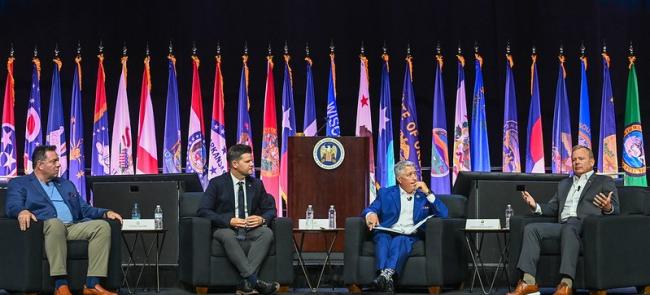
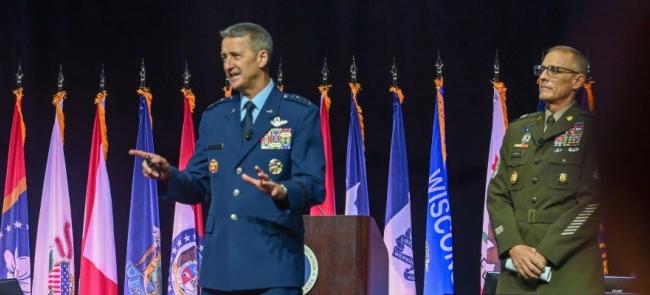
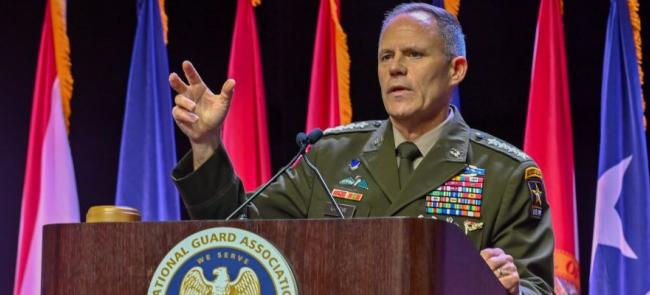
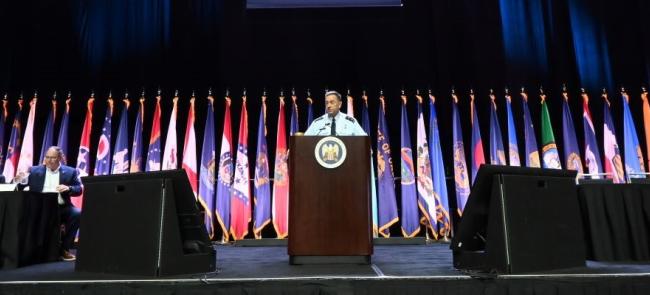
NGAUS members across the 54 states, territories and the District of Columbia will gather later this month at the 148th General Conference & Exhibition to hear defense leaders and network with their peers.
But the core of the conference — and the reason the 54 gather annually — is to complete the association’s legislative resolution process.
“This is why the annual conference was established. The resolution process sets NGAUS priorities,” said Jon Eisberg, the association’s vice president for government affairs.
“Everything we do stems from what NGAUS members believe are key to the Guard’s future as both the primary combat reserve of the Army and the Air Force and the military’s first responders during disasters at home,” he added.
This year’s approved resolutions will serve as the basis of NGAUS legislative agenda for 2027 and advocacy efforts for congressional work on the fiscal 2028 defense legislation.
How it starts
NGAUS legislative priorities begin with the state, territory and District of Columbia associations, giving association members a direct way to help shape the legislative agenda.
The process is designed to ensure that issues affecting the force — from manpower and force structure to roles, missions, equipment, modernization, medical care, personnel policy and homeland defense — are identified at the grassroots level before becoming part of the association’s advocacy plan.
State and territory Guard associations develop resolutions at their annual conferences with an eye toward the coming session of Congress and influencing the Government Affairs advocacy efforts on Capitol Hill.
Next steps
NGAUS staff review the proposed resolutions and solicit input from the association’s 12 issue-oriented task forces and the National Guard Bureau.
NGAUS Task Forces are composed of National Guard subject-matter experts from across the 54, appointed by the NGAUS chairman. Their input ensures proposed resolutions are accurate, timely and aligned with requirements in the field.
Conference review & approval
Draft resolutions then move to the general conference, where delegates from the 54 states, territories and the District of Columbia consider the package through Army, Air and Joint resolutions committees.
Joint resolutions typically address issues that cut across both the Army and Air National Guard, including personnel and pay, medical, and domestic operations.
Army and Air resolutions generally focus on missions, equipment and capabilities specific to the Army Guard or Air Guard.
Once resolutions are approved by the committees, they are included in a package that goes before conference delegates for a final vote. The number of delegates each state, the District of Columbia and the three territories send to the conference is based on membership percentages.
This year, 461 resolutions have been submitted. Of these, 92 will be considered at the conference. This includes 53 additional resolutions, 17 amendments and 22 deletions. The approved package can include far more resolutions than can be addressed in a year.
“To be effective and realistic, we have to pare down the final resolution package to the most pressing concerns that make the most fiscal sense,” Eisberg said. “What we try to do is get a good representation of all our constituents. We do have a limited staff, so we need the support and engagement of our entire Guard community.”
The adopted resolutions become formal statements of NGAUS policy and provide the foundation for the association’s legislative objectives.
Legislative plan
In the fall, the NGAUS government affairs team works with the task forces and other stakeholders to develop a legislative plan for the upcoming fiscal year.
The association then publishes a Legislative Objectives booklet that includes all standing resolutions and distributes it to state association leaders, industry partners and NGAUS task forces.
These objectives guide NGAUS advocacy with Congress and ensure lawmakers understand the priorities of the National Guard community.
Standing resolutions remain in effect for three years and may be extended in one-year increments.
Membership matters
The resolutions process is the mechanism that turns member experience into NGAUS policy and, ultimately, into congressional advocacy.
By submitting thoughtful, timely resolutions through their state associations, Guard officers help NGAUS identify the issues that matter most to the force and ensure those priorities are carried forward in Washington.
As Blaise Lemke, the manager of the Army Guard programs for the NGAUS government affairs team puts it, “It is critical for Guardsmen to get involved in their state associations. This involvement serves to amplify our voice and advance our mission.”
—By Michael Metz