then Add to Home Screen.
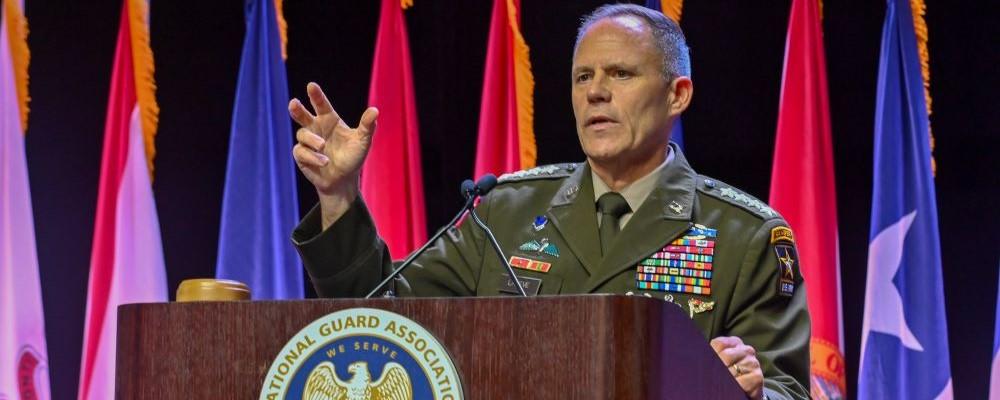
Gen. Christopher LaNeve, the acting Army chief of staff, emphasized the Army National Guard’s indispensable, multidomain contributions to the Joint Force on Aug. 29 at the 148th General Conference & Exhibition in Indianapolis.
Referencing the Army’s newly released strategy document, the Army Azimuth, LaNeve stressed the Guard’s essential role across all three Army priorities: defending the homeland, warfighting and projecting power on and from the land.
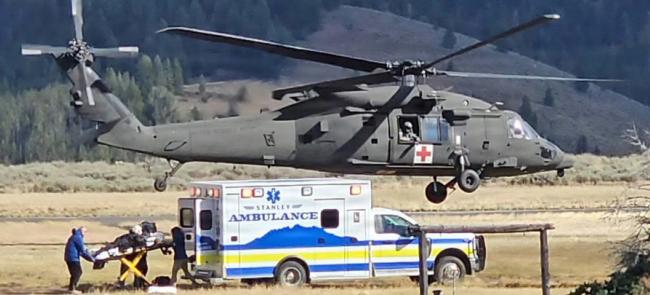
“You carry a heavy load of defending the homeland, whether that manifests in Joint Task Force Southern Border, D.C. Safe and Beautiful or response efforts aligned with national disasters,” LaNeve said.
LaNeve thanked the Guard for its ongoing support of D.C. Safe and Beautiful — a mission that has brought nearly 10,000 Guardsmen from around the country to support local and federal law enforcement efforts aimed at restoring order in the nation’s capital.
“When I think about the National Guard, I think of individuals who are truly part of their communities, faces that folks recognize and can directly associate with service,” LaNeve said. “That’s a powerful force for good in our nation.”
As a young brigade operations officer, LaNeve witnessed the Guard’s tenacity in the wake of Hurricane Katrina. His unit conducted a relief in place for the Louisiana Army Guard’s 256th Infantry Brigade Combat Team in Iraq, whose Soldiers were serving their final weeks of deployment when one of the worst hurricanes in decades devastated their home state.
“The professionalism they displayed during that [relief in place] will always, always stay with me,” LaNeve said. “In the face of absolute worry, they did not falter.”
That same professionalism and tenacity, LaNeve said, is rooted in Soldier fundamentals. Returning to a “warrior mindset” across the force is critical for maintaining the Army’s position as the world’s most dominant land power.
He outlined this as going back to the basics of rigorous physical training, knowing the mission-essential tasks associated with your military specialty and preparing your equipment.
“Each of us has a moral obligation to our nation and the Soldiers we serve to become the strongest, most lethal and most ready version of ourselves possible,” LaNeve said. “We must care about the basics today to keep our Soldiers alive on the battlefield tomorrow.”
With four Guard mobile brigades scheduled to conduct combat readiness exercises in fiscal 2027 and Guardsmen currently serving in the U.S. Central Command area of operations, embracing a warrior mindset is more critical than ever, he said.
“You are in the fight.”
LaNeve praised the Virginia Guard’s 116th Mobile Brigade Combat Team as the first Guard brigade to participate in a Joint Readiness Training Center rotation ahead of the Army’s plans to convert 25 Army Guard BCTs to the MBCT structure by the end of fiscal 2028.
“You are a critical part of our ability to be postured to respond immediately to crises and contingencies both at home and abroad,” he said.
Operation Epic Fury demonstrated how the Army remains the foundation of the Joint Force, he said. While the operation may appear to center on air power and a blockade, the Army —including the Army Guard — has continued to provide critical warfighting functions in theater.
He cited the New York-based 42nd Infantry Division, which led Task Force Spartan and provided tactical mission command for land forces from February to May.
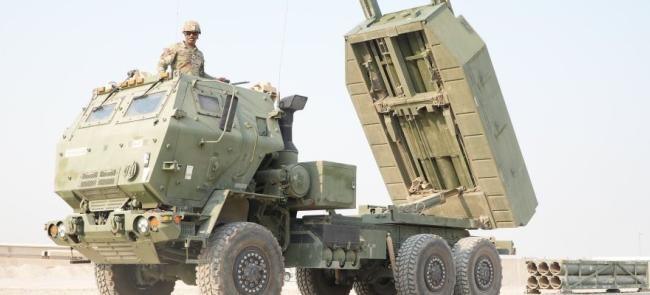
LaNeve also mentioned the Kansas Army Guard’s 130th Field Artillery Brigade, which transitioned from supporting Combined Joint Task Force-Operation Inherent Resolve to serving as the field artillery headquarters for U.S. Central Command forces and executed one of the longest deep field-artillery strikes in Army history.
“You are a powerful part of our ability to project power on and from the land,” LaNeve said. “The National Guard generates combat-credible formations and helps strengthen the capacity of our allies and partners through the State Partnership Program.”
The SPP now encompasses 117 partnerships, connecting states, territories and Washington, D.C., with partner nations in every geographic combatant command.
“We must position ourselves favorably left of conflict, whether that be campaigning, building relationships or forward-basing,” he said. “Through the actions we take today, we are hardening lines of communication and reinforcing the forward areas of the future fight, and you are on the vanguard of this.”
LaNeve also described the Guard’s role in “endurance,” one of four elements of land power outlined in the Azimuth alongside convergence, strike and close battle. Together, they guarantee the Army’s ability to maneuver on the battlefield and deliver joint all-domain maneuver when integrated into the Joint Force.
“Endurance is about our ability as an Army to persist,” he said, “to ensure we can maintain posture, protection, projection of power across time, distance and in the face of an unforgiving and persistent adversary. We use endurance to translate victory on the battlefield to victory in war.”
The Guard’s ability to mobilize helps project power over time and distance, making it essential to the endurance of the Army’s land power. State partnerships build the relationships needed for posture and power projection abroad, and the Guard’s daily contributions to endurance directly support the Army’s ability to conduct operational maneuver, LaNeve said.
“We may have three compos, but we are one Army,” he told the audience, using a shorthand term for the Army’s active, Guard and Reserve components. “That Army is the foundation of our Joint Force.”
—Reported by Master Sgt. Sarah McClanahan
National Guard Bureau
Additional panel discussions and presentations from the 148th General Conference & Exhibition are available here.