then Add to Home Screen.
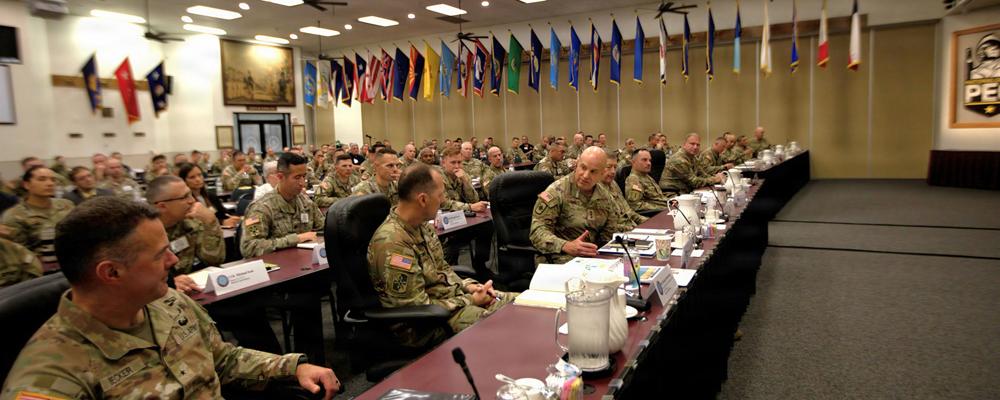
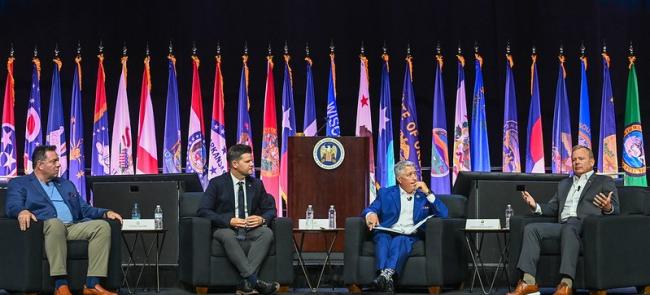
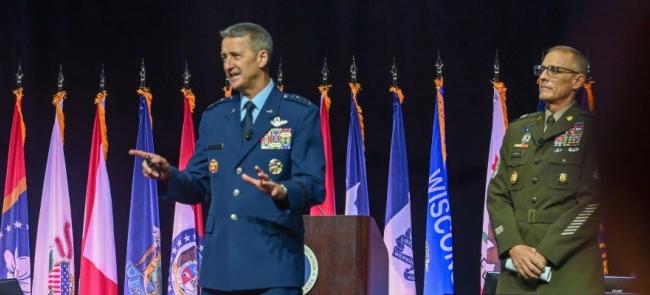
Army National Guard leaders nationwide joined Army and mobilization enterprise partners Sept. 15-17 at the National Guard Professional Education Center at Camp Robinson, Arkansas, for the Director of the Army National Guard Large-Scale Mobilization Operations Tabletop Exercise.
The three-day DARNG LSMO TTX examined whether current mobilization processes, policies, authorities and force-generation models can deliver multiple combat-ready formations at the scale, speed and simultaneity required during large-scale combat operations.
Ten states provided detailed state-level inputs during the exercise, helping leaders stress-test the Army Guard’s three-phase LSMO construct and examine challenges identified by states and the Army Guard staff.
The findings are intended to inform mobilization readiness across the entire force.
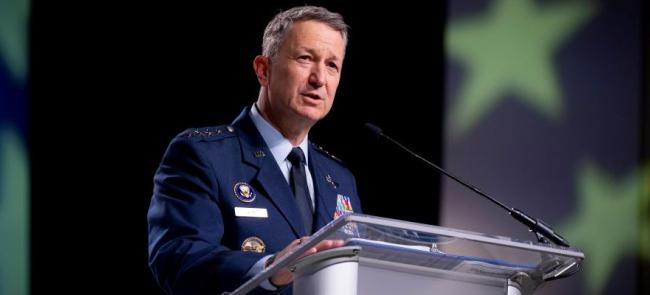
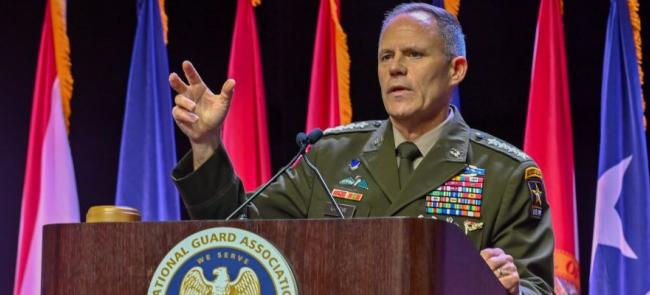
“The strategic environment demands that the Army National Guard be prepared to generate and project combat power at a scale and speed we have not experienced in decades,” said Lt. Gen. Jonathan Stubbs, the Army Guard director.
“We have to identify the friction, assess the risk, assign ownership and drive solutions,” Stubbs added. “That is how we ensure we can generate, mobilize and project combat-ready forces at the speed and scale required for large-scale combat operations.”
The exercise deliberately challenged assumptions developed during more than two decades of rotational deployments. Large-scale conflict could require the Army Guard to mobilize multiple formations simultaneously while preserving unit cohesion, sustaining follow-on forces and maintaining capabilities required for homeland defense and other domestic missions.
Participants examined the mobilization enterprise from alert through force movement, focusing on authorities and policies, personnel systems, logistics, maintenance, transportation, force aggregation and coordination across the Army and the Joint Force.
Simultaneity was a central focus. During large-scale operations, the Army Guard may be required to prepare multiple formations for federal at home and aboard while maintaining capabilities needed to support the governors.
For the Army Guard’s force-generation team, the TTX provided an opportunity to examine how those systems and processes perform when demand increases across multiple formations at once.
“Large-scale mobilization requires us to see the entire force-generation process as one connected system,” said Col. Chin U. Kim, the chief of the Force Generation Division, Mobilizations. “The momentum gained through this exercise gives the Army National Guard a shared understanding of enterprise-level issues and a foundation to work through them together.
“The next step is to bring these outcomes into senior leader forums, build concurrence and support, and continue advancing our LSMO objectives and priorities.”
Generating combat power at scale also depends on the readiness of both personnel and equipment. The TTX gave planners an opportunity to examine how those readiness requirements align with mobilization timelines and force-generation demands across multiple formations.
State participation added the perspective of those responsible for translating enterprise guidance into executable mobilization plans at the formation level.
The exercise also examined the distinction between responsibilities and authorities at the national level and those retained at the state level, including the roles of governors and adjutants general, to better understand how those authorities must align during a large-scale mobilization.
—By Maj. Cibeles Ramirez-Rodriguez, National Guard Bureau