then Add to Home Screen.
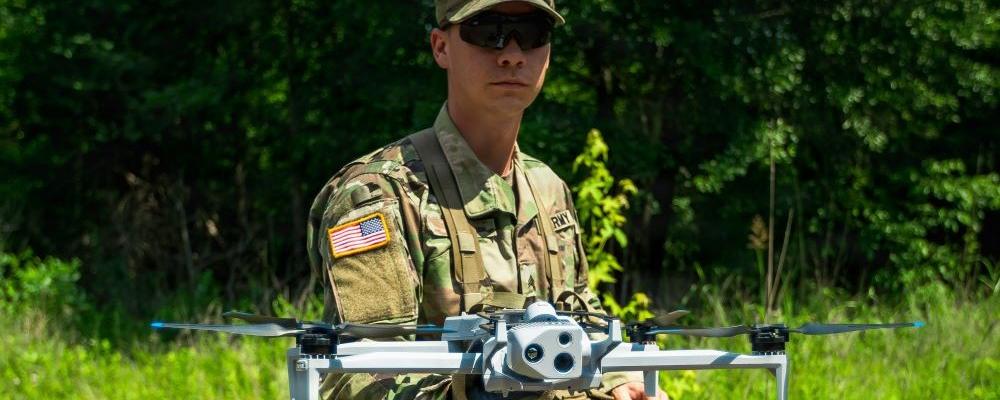
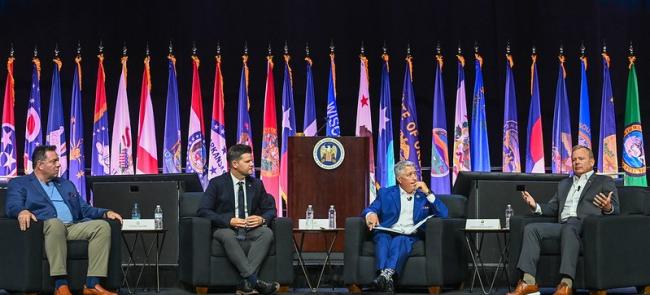
The wars in Iran and Ukraine demonstrate the nature of warfare has moved away from traditional battlefields. The impact that evolution has on the National Guard both at home and abroad is the focus of one of three NGAUS panel discussions.
“The most important change is that the cost barrier to generating strategic effects has dropped dramatically. What once required nation-state-level effort — stealth aircraft, coordinated strike packages, and significant resources — can now be achieved with relatively simple, low-cost systems,” wrote retired Lt. Gen. David J. Julazadeh earlier this year.
Julazadeh, who has more than 34 years of operational and strategic experience commanding across the joint force and NATO, recently joined Business Executives for National Security as its chief operating officer. BENS is a nonpartisan group providing private-sector knowledge and solutions to the challenges of national security.
The panel will consider lessons being learned about asymmetric warfare influences how the Guard trains and its operational doctrines.
The panelists will bring the perspective from two adjutants general on the frontlines of preparing their states to respond to potential threats from drones, independent actors and terrorist organizations.
Brig. Gen. Olen (Chad) Bridges, adjutant general of the Arkansas, and Maj. Gen. Mark Morrell, adjutant general of South Dakota, will discuss how the evolving battlefield and threat environment is affecting how their units train and respond.
As part of its annual training, the Arkansas National Guard trains with emerging unmanned aircraft systems and counter-UAS technology and works with the private sector to test new systems.
In South Dakota, Morrell plays an integral role as vice chair of the Governor’s Resilience and Infrastructure Task Force. Known as GRIT, the task force works to formulate policy recommendations, assess risks and vulnerabilities in critical infrastructure systems across the state.
GRIT brings together stakeholders in industry, government and critical infrastructure to identify ways to understand the risks and better prepare for them. Rapid City, South Dakota was one of many cities targeted in cyberattacks across the nation this summer.
Laura Kupe, deputy chief program officer at BENS, has experience both in the private sector and government. She has worked at the Pentagon, as counsel to the House Homeland Security Committee and Department of Homeland Security.
“The private sector is no longer a bystander to conflict. Adversaries now operate inside privately owned systems, at commercial speed, using commercial tools, targeting commercial functions — and the government can't see or act inside those systems fast enough to defend them from the outside,” added Laura Kupe.
Dan Fata, a national security expert and advisor to NGAUS, will moderate the panel discussion. The concept for the conversation stemmed from his reading Julazadeh’ s Atlantic Council article.
—By Jennifer Hickey