then Add to Home Screen.
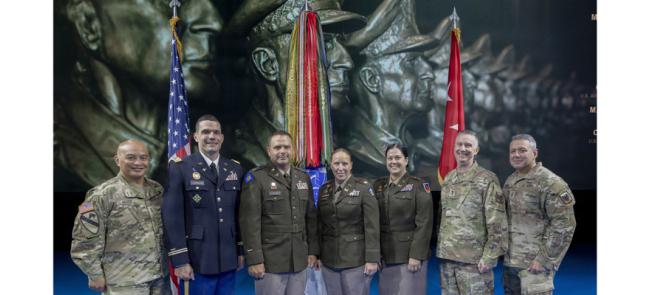
The Army Current Operations Engagement Tour included visits with senior Army and Defense Department officials, two days on Capitol Hill to speak with lawmakers and staff, and a virtual media roundtable with defense reporters.
Army officials conduct multiple such tours annually to share the Army story and those commanders and other unit leaders who are authoring it, especially as it relates to supporting national security objectives and continuous transformation.
The 116th MBCT is headquartered in Virginia. Most of the brigade’s major subordinate commands are also located in The Old Dominion State, but one of its battalions is part of the Kentucky Army Guard.
Col. Arthur S. Moore, the brigade commander, said his unit’s transformation demonstrates how the Army is building more “mobile, agile, survivable and lethal formations.”
Over the past 18 months, the brigade fielded about 35 new capabilities while simultaneously supporting domestic missions, conducting major training events and completing a JRTC rotation in June at Fort Polk, Louisiana.
As the first Guard brigade to complete the transition, the 116th MBCT serves as a model for future Guard modernization efforts, Moore said.
“Ultimately, 25 of the Army National Guard’s 27 brigade combat teams will transition to the mobile brigade combat team structure,” he added. “Since roughly half of the Army’s combat power resides in the National Guard, this modernization effort is incredibly significant.”
The introduction of new capabilities designed to increase mobility and battlefield awareness is a major component of that transformation, Moore said.
He explained that the MBCT combines a leaner force structure with advanced technologies, including Infantry Squad Vehicles, unmanned aerial systems, counter-UAS capabilities, electromagnetic warfare systems and improved command-and-control tools.
“We’ve also received short, medium and long-range unmanned aerial systems for reconnaissance, loitering munitions, counter-unmanned aircraft systems, advanced command-and-control capabilities, improved communications and electromagnetic warfare systems,” Moore said.
Soldiers employed new systems in realistic training scenarios during the brigade’s JRTC rotation.
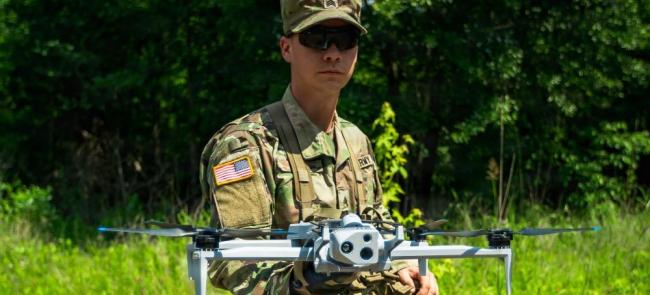
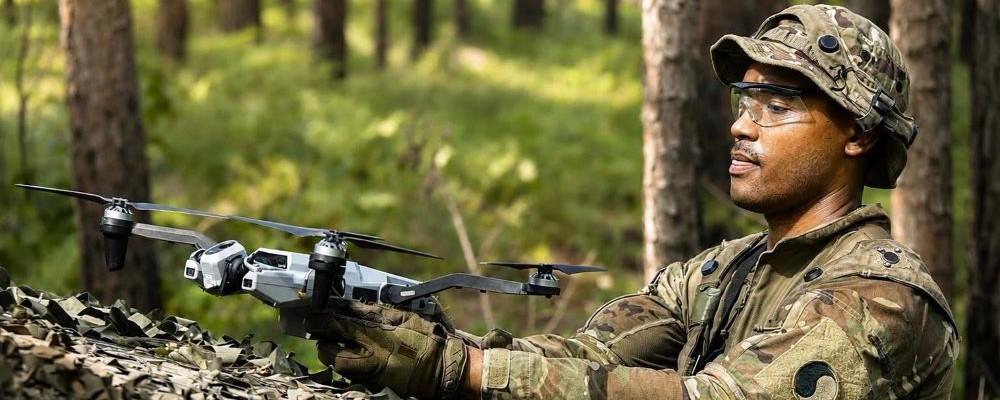
“During JRTC, we fielded approximately 21 short-range Teal reconnaissance drones,” said 1st Lt. Adam Mayers, the brigade’s assistant operations officer. “For the first time, we were able to use those systems to identify targets and then adjust mortar fire onto them. That was a significant capability increase.”
One of the most notable aspects of the brigade’s modernization effort is how quickly Soldiers can learn to operate emerging technology, Mayers said.
Rather than relying on specialized operators, infantry Soldiers received training to employ drone systems after less than a week of instruction, significantly expanding the brigade’s ability to integrate unmanned capabilities across the formation.
Leaders also emphasized the importance of partnerships in accelerating modernization.
Through collaboration with industry, the brigade has been able to experiment with emerging technologies and evaluate capabilities faster than traditional acquisition and infrastructure timelines would normally allow.
Mayers explained that those relationships extend beyond experimentation. During JRTC, industry partners were able to rapidly resolve technical issues with operational systems, providing immediate support that helped maintain readiness and keep Soldiers training.
As the Army continues fielding MBCTs across the force, brigade leaders said the lessons learned by the 116th MBCT will help inform future formations undergoing the same transition.
—By John Goheen
With reporting by Sgt. Tien-Dat Ngo
Army Communications and Outreach Office