then Add to Home Screen.
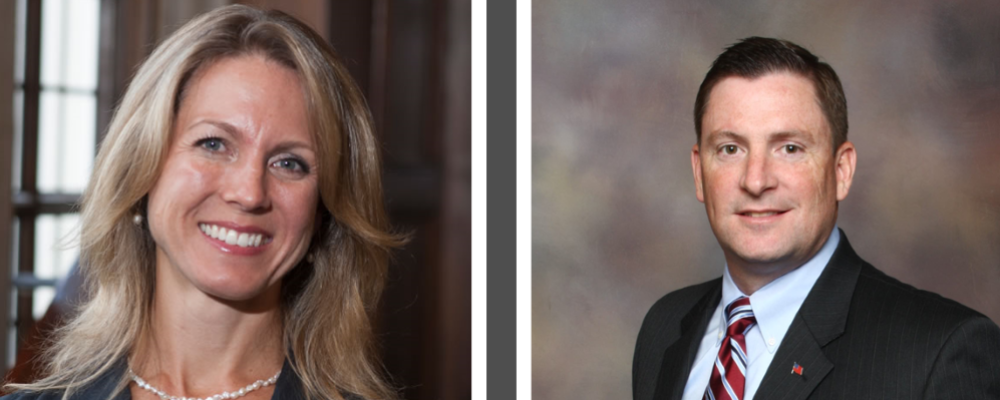
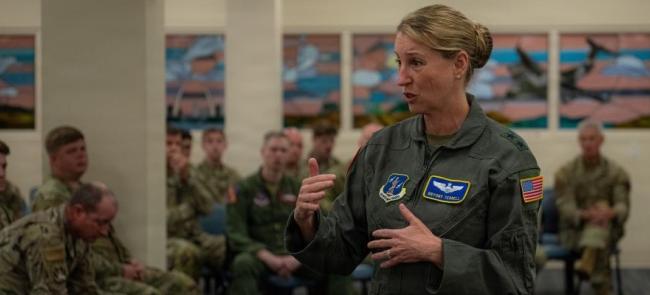
One of the two District of Columbia Air National Guard fighter pilots sent on a potential suicide mission the morning of Sept. 11, 2001, will share that experience Sunday morning at the 148th General Conference & Exhibition in Indianapolis.
Then-1st. Lt. Heather “Lucky” Penney and then-Lt. Col. Marc “Sass” Sasseville took off in their F-16s from Andrews Air Force Base outside of Washington, D.C., to intercept United Airlines flight 93, which was hijacked and believed to be heading to the U.S. Capitol.
Two hijacked planes had already crashed into the World Trade Center’s twin towers in New York City that day, while a third struck the Pentagon.
There wasn’t enough time to outfit Penney and Sasseville’s aircraft with live ammunition, so their only option was to ram the plane.
They decided to aim for different parts of the commercial airliner. Sasseville would strike the cockpit; Penney would hit the tail.
Ultimately, they never had to execute their plan. The passengers of Flight 93 attacked their hijackers and forced the plane down in Shanksville, Pennsylvania.
Penney will be joined in a conference panel discussion Saturday with another now-retired officer who also has a unique perspective on that day nearly 25 years ago.
As events unfolded, then-Marine Corps Maj. Robert Darling spent 24 consecutive hours in the White House Bunker Complex.
Officially, he was the White House Airlift Operations Officer. On 9/11, he was the liaison between Vice President Dick Cheney and the Pentagon to help coordinate real-time defense decisions.
With President George W. Bush on scheduled travel that day, Cheney was the senior-most official physically present at the White House. Darling was next to the Vice President for much of the day.
Before taking his post at the White House, he flew attack helicopters in the Marine Corps, including during the first Persian Gulf War. He is the author of 24 Hours Inside the President’s Bunker, 9/11/01: The White House.
Darling retired as a lieutenant colonel.
After 9/11, Penney flew two combat tours flying the F-16 as a part of her 23 years in uniform.
Today, she is director of research at the Mitchell Institute for Aerospace Studies, where she is responsible for managing and conducting extensive research on cutting-edge defense policy with a focus on the leverage aerospace power affords.
Penney also continues to fly. She has raced jets at the Reno Air Races, and she actively flies her own vintage aircraft, flies for the American Heritage Museum and is also a corporate pilot on the Citation XLS+.
The two are high-demand speakers on the events of 9/11. The NGAUS conference is one of 23 speaking engagements Darling has scheduled between now and Veterans’ Day, he said.
—By John Goheen