then Add to Home Screen.
“Together, we need to lead boldly, and we can never be late to need.”
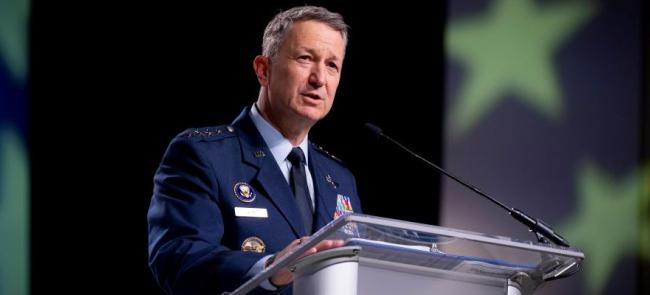
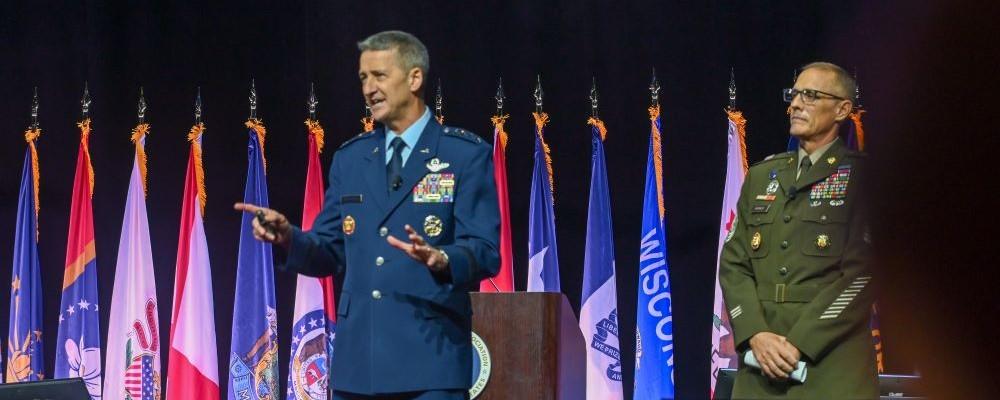
That’s how Air Force Gen. Steve Nordhaus, the chief of the National Guard Bureau, challenged Guard leaders to keep pace with a dynamic security environment. He described the Guard as a force that continuously adapts and modernizes while keeping its 435,000 Guardsmen and their families ready for missions at home and abroad.
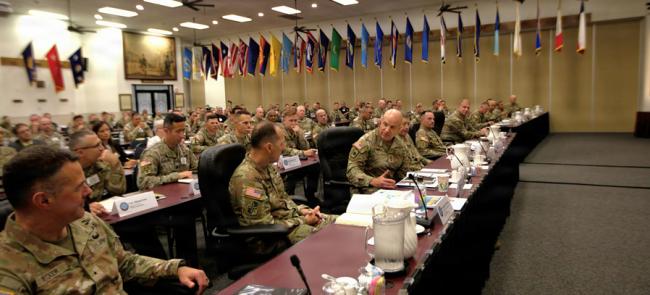
Nordhaus and Senior Enlisted Advisor John Raines, the SEA to the NGB chief, addressed the 148th General Conference & Exhibition on Aug. 29 in Indianapolis.
They reinforced four priorities: warfighters and families, readiness, partnerships and modernization.
Together, these priorities form a strategy designed to keep the Guard ready for its dual role — fighting alongside the Joint Force and defending the homeland — while ensuring its Soldiers and Airmen have the resources and support necessary to succeed.
“Our warfighters are innovators,” Nordhaus said. “They work in their civilian careers while balancing military jobs. They bring all those skill sets together which provides incredible capabilities and a sizable return on investment for our nation.”
That is one of the Guard’s defining advantages.
A Guardsman may be a teacher, firefighter, business owner, cyber expert, electrician or other professional in civilian life while simultaneously serving as a trained military warfighter. Those experiences converge inside Guard formations, creating a force that brings capabilities from across the workforce into the defense of the nation.
Taking care of the force
For Nordhaus and Raines, modernization begins with the Soldier and Airman — not the weapons systems.
That philosophy is shaping the Guard’s efforts to address personnel and family needs while pursuing legislative initiatives designed to boost readiness. Nordhaus referenced the president’s budget request as a signal of the nation’s commitment to rebuilding and strengthening the military, noting that the proposed increase for the Guard is the largest in decades.
That investment would create an opportunity to grow the Army Guard and the Air Guard while providing the resources needed to build ready, capable units for both homeland defense and combat operations.
Nordhaus said NGB supports Pentagon and Army and Air Force legislative proposals to grow the force, including a dual-status technician conversion intended to address vacancies and improve the Guard’s ability to retain capable troops.
Another is the National Guard Equipment Reimbursement initiative, which would help states recover costs associated with utilizing Guard equipment during state active-duty missions.
When hurricanes, floods, wildfires or other disasters strike, states frequently rely on the Guard to respond immediately. Returning those resources to the states would allow equipment used during those missions to be repaired, restored and ready for the next call.
These legislative efforts reflect a broader principle: readiness for combat equals readiness for homeland response missions.
This year, Guardsmen have responded to major winter storms, wildfires, hurricanes, floods and other emergencies, while simultaneously supporting law enforcement efforts in American cities and contributing warfighting forces to Operation Absolute Resolve and Operation Epic Fury.
Additionally, Air Guardsmen patrol the skies above America every day through Aerospace Control Alert units. Army Guardsmen provide the nation’s primary intercontinental ballistic missile defense from within defense nodes in Alaska, California and Colorado.
For the service members comprising the Guard, however, the measure of readiness extends beyond equipment and operational statistics.
It comes back to families, Raines said.
“Families are critical to everything we do,” he said.
He added that the Guard recruits individual service members but retains their service through their families. Leaders, he said, therefore have a responsibility to ensure that service remains sustainable for both the warfighter and those waiting for them at home.
That includes the civilian employers who make Guard service possible.
Raines described the relationship between the service member, family and employer as a critical triad. A Guardsman thrives, he said, with the support of family and employers who understand that military service may require them to leave their civilian lives on short notice.
Ultimately, he said, taking care of warfighters means preparing them to survive.
Modernizing at the speed of relevance
That principle — never late to need — drives efforts across the Guard to rapidly transition from emerging technology to operational capability and modernize platforms concurrent with the Army and the Air Force.
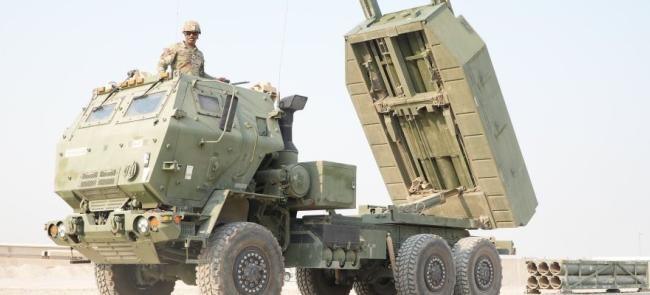
The Guard is increasingly focused on artificial intelligence, offensive and defensive unmanned aircraft systems, cyber capabilities and other technologies that are changing how military operations are conducted.
Based on the Guard’s success implementing the AI-enabled MAVEN Smart System during support to the FIFA World Cup, Nordhaus said the Guard is looking to expand that capability across the enterprise.
But modernization is about more than buying new equipment and fielding new tools. It’s about changing the way the Guard identifies problems, tests solutions and puts capabilities into the hands of warfighters.
Technology Readiness Experimentation is one example.
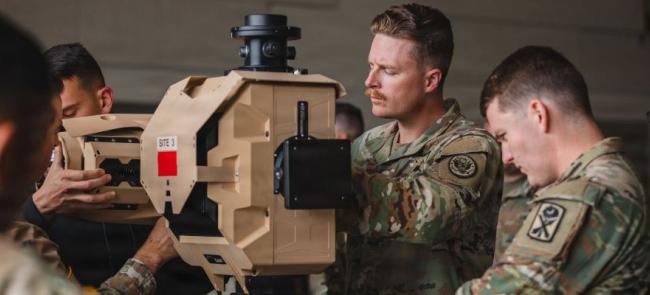
T-REX brings engineers, acquisition professionals and industry partners together to rapidly equip Guardsmen with emerging technologies to test in realistic operational environments and provide real-time feedback.
The objective is to bridge the gap between an idea and warfighter capability.
Through T-REX and the Rapid Assessment of Prototype Technology Readiness Task Force, the Indiana National Guard exemplifies this by connecting operational requirements with industry and senior defense leaders to advance promising technologies.
In addition to testing and fielding nascent warfighting equipment, the Guard continues modernizing across its existing force structure.
Upgraded aircraft — including the F-15EX fighter, KC-46 tanker, C-130J cargo plane and F-35A stealth fighter — represent significant investments in the Air Guard.
Aligned with headquarters-level Army initiatives, the Army Guard is rapidly transforming its ground maneuver elements. This was demonstrated during Joint Readiness Training Center Rotations this year, as Army Guard infantry brigade combat teams transition to lighter, more agile mobile BCTs.
For the Guard, modernization is not a buzzword. It is about ensuring that Guardsmen have the right equipment at the right time for the right mission.
Ready to fight, ready at home
As a critical component of the Joint Force, the Guard provides almost 40% of the Army’s operational capabilities and 30% of the Air Force’s, while maintaining the ability to respond domestically.
Large-scale exercises, like Northern Strike in Michigan, provide opportunities to integrate Guardsmen with Joint Force service members and foreign counterparts in increasingly complex combat-training scenarios. Cyber Shield in Arkansas brings thousands of National Guard cyber professionals together with partners from across the states and around the world.
The same readiness is being built through partnerships.
The Guard’s State Partnership Program now encompasses 117 partnerships, connecting states, territories and the District of Columbia with partner nations in every geographic combatant command.
These partnerships create more than diplomatic ties. They bolster military interoperability, foster enduring relationships and establish a common operational understanding that can be leveraged before a crisis occurs.
The Guard applies the same philosophy with partners at home.
Raines explained how the newly funded National Guard Response Force initiative provides more than 22,000 Guardsmen nationwide with the opportunity to train with first responders and interagency partners before emergencies ever happen.
The goal, he said, is simple: Know each other before the disaster strikes.
Stronger together, stronger tomorrow
For Nordhaus and Raines, the Guard’s strategic direction is centered on building a force that’s stronger tomorrow than it is today.
That requires investing in warfighters, sustaining readiness, building partnerships that extend from local communities to the global stage and modernizing to keep pace with the changing character of warfare.
For a force whose mission dates back to the colonial militias, the core task hasn’t changed: defend and secure the nation and be there when citizens need help.
By Master Sgt. Zach Sheely and Master Sgt. Sarah McClanahan, National Guard Bureau
Additional panel discussions and presentations from the 148th General Conference & Exhibition are available here.