then Add to Home Screen.
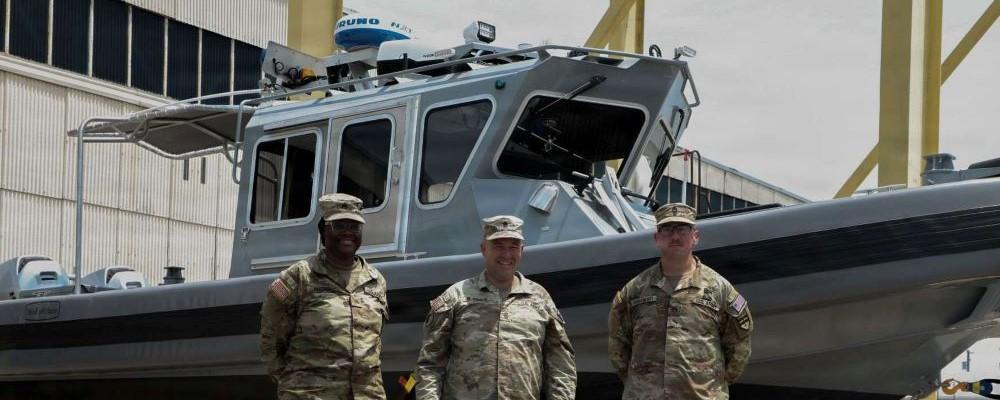
The District of Columbia National Guard's 260th Special Purpose Brigade recently commissioned its first maritime security vessel, marking the first time an Army unit in the nation's capital has operated a dedicated waterborne platform.
The new capability strengthens the guard's ability to secure the district's waterways, critical infrastructure and major national events.
Army Brig. Gen. Leland D. Blanchard II, D.C. National Guard interim commander, said the organization's newest maritime capability reflects its legacy of service and its vision for the future.
"For 224 years, the District of Columbia National Guard has answered our nation's call by evolving to meet the challenges of every generation," Blanchard said. "This new maritime capability is more than a vessel — it is an investment in the partnerships, readiness and modern capabilities that enable us to better support the local, state and federal agencies that protect our nation's capital every day."
Created under an executive order, the brigade was designed to enhance coordination between military forces and the district's civilian security agencies.
Washington's security environment is uniquely complex — protected airspace, dense federal infrastructure, overlapping jurisdictions, all within two bodies of water. Brigade soldiers routinely support local and federal law enforcement, fire and emergency services during national special security events.
Bounded by two rivers, the district requires a robust maritime security posture. The brigade's new vessel, sourced through a Navy partnership, will support waterborne operations during events. It primarily serves as an observation and assessment platform enabling civil support teams to conduct hazard detection aboard vessels and expand overwatch alongside local units.
"We're not replacing law enforcement — we're increasing their capacity," Army Col. Larry Doane, brigade commander, said, emphasizing the guard's supporting role. "When the district needs more eyes, more reach, more resilience, that's where we come in."
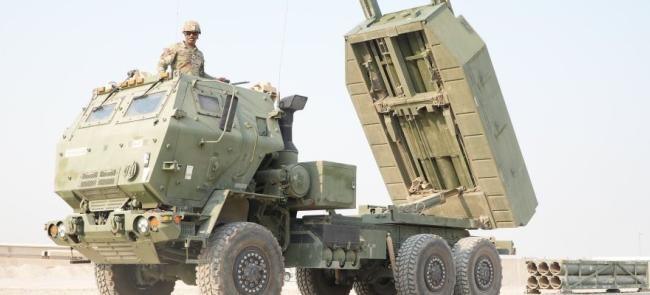
The waterborne vessel complements a broader modernization effort within the brigade's 547th Transportation Company, which now operates a growing fleet of tactical vehicles to maneuver through dense crowds and restricted urban terrain during events.
These assets support local and federal law enforcement armed overwatch, traffic control points, rapid movement across secured zones, medical services and dignitary protection missions — completing the brigade's evolution into a multidomain security force.
"The 547th has to be not only one of the most effective, but one of the coolest transportation units in the world," Doane said. "Not only does it operate light medium tactical vehicles, and heavy tactical vehicles — but it has a fleet of [off-road tactical] vehicles and now a growing fleet of security vessels to support maritime security."
The brigade's mission reflects a core principle of the National Defense Strategy: resilience deters adversaries. Doane noted that attackers study soft targets, but in Washington they find none.
"When someone goes into our Metro trains and sees you can't even get away with a purse snatching and petty crime, that matters," he said. "Presence prevents bad actors from believing an attack will succeed."
"When symbols of freedom are center stage, like on the Fourth of July, some bad actors might see a target. In such cases, we pivot on a dime and defend the capital," Doane said. "But even more important than the pivot is the deterrence of presence, high-level training and equipment that prevents the attack in the first place."
With one vessel operational and four planned, the brigade is working with the Navy to select platforms proven worldwide and interoperable with the local law enforcement fleet. The goal is seamless coordination across agencies responsible for defending the nation's capital.
"We used to rely on the oceans for homeland defense," Doane said. "We can't rely on that anymore. We rely on resilience and deterrence — our enemies must know we're prepared."
— By Army Sgt. 1st Class Kevin Valentine, Joint Task Force D.C.