then Add to Home Screen.
The Other Football
Maj. Eric Barton got a lesson in just how emotionally invested Bosnia and Herzegovina is in its national soccer team the evening of March 31.
The Maryland National Guard’s bilateral affairs officer in the Balkan country says he and his young daughter were watching a movie on TV in his apartment in Sarajevo, the nation’s capital, when “explosions started going off.”
“For a second, I thought, oh no, is something terrible happening?” he recalls.
“Then my phone started lighting up,” Barton says. “I heard from some colleagues. The explosions were fireworks. Bosnia had just beaten Italy to qualify for the World Cup, and there was a mass celebration in the city. People were singing and dancing and celebrating. Cars were going up and down the street with [Bosnian] flags hanging out.
“I was in the house in the comfort of my living room, and you could feel the energy coming through,” he adds.
“As Danny Rojas from Ted Lasso says, ‘football is life’ here,” Barton explains, “football” being what most people around the world refer to the game those is the United States call soccer.
Maryland and Bosnia and Herzegovina have been linked in the Guard State Partnership Program since 2003. “There are deep relationships built here,” Barton says, “and when it comes down to it, we’re the main show in town for the U.S. when it comes to mil-to-mil exchanges.”
Recent engagements have focused on logistics and vehicle maintenance, cybersecurity, and aviation and medical training. As the Maryland Guard’s full-time rep in the country, Barton helps coordinate them with the Armed Forces of Bosnia and Herzegovina.
Soccer is a way of life in Paraguay. It’s a conversation everywhere you go.
—Maj. Luis Alverez, the bilateral affairs officer of the Massachusetts National Guard
The assignment has helped him get to know both the host nation’s military and the local culture. Bosnia and Herzegovina endured a brutal civil war along ethnic lines in the 1990s after the breakup of Yugoslavia. At one point, there were three sides in the conflict.
Barton says he works with members of the former warring factions. “They’re now working on the same staff,” he explains.
“To have the flag of Bosnia-Herzegovina flying over the World Cup stage is something that really means a lot to everyone in this country,” he adds.
For generations, kids in BiH and many other countries around the world have played soccer whenever they can find a ball and open space. As adults, they live the game through their local clubs and the national team. No other sport stirs the same passion.
The World Cup, the quadrennial international championship of men’s national teams, is the sport’s biggest stage. An estimated 1.5 billion people worldwide watched the 2022 World Cup final on TV.
While soccer’s popularity is growing here, the sport was a late addition to America’s sports fare. The United States went 40 years (1950 to 1990) without qualifying for a World Cup. And it didn’t have a major professional soccer league when the nation hosted the event for the first time in 1994.
The United States is co-hosting this year’s World Cup with Canada and Mexico. FIFA, the sport’s international governing body, expanded the field from 32 to 48 teams, which enabled some countries to qualify for the first time in years. Others are making their first appearance. Bosnia and Herzegovina hasn’t taken part since 2014.
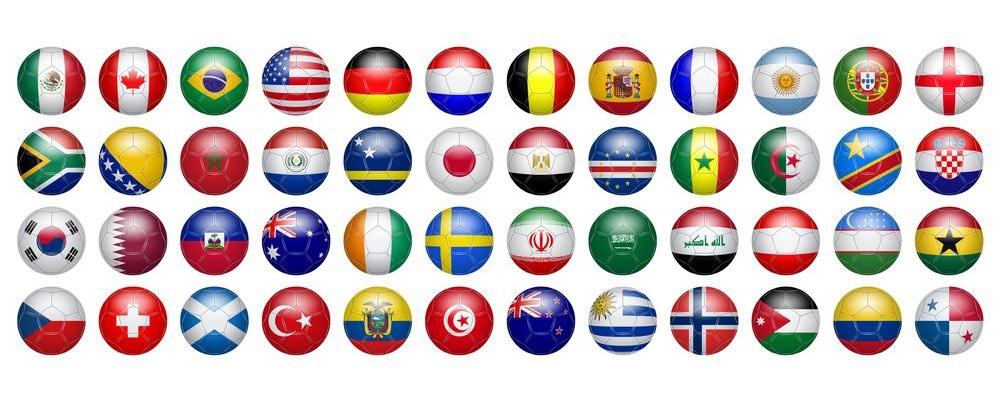
Twenty-nine teams are from nations in the SPP. Another is Norway, which qualified for its first World Cup since 1998.
Norway has only been in the SPP since 2023, but the country’s Home Guard and the Minnesota Guard have had a reciprocal troop exchange program for 54 years. The program is “building upon that relationship,” says Maj. Janelle Johnson, the Minnesota Guard’s BAO in the country.
Winters are long in northern Europe, making cold-weather sports very popular, Johnson says. Norway topped the medal count at the recent Winter Olympics in Italy, winning a record 18 gold medals.
But soccer is also very popular. “You see kids as young as toddlers all the way up high school on the fields,” she adds, “and they heat their fields here so they can train year-round.”
Now, the country’s attention is fixed on the World Cup. Johnson escorted eight members of the Norwegian Parliament to Minnesota in late June to visit Guard facilities. They were to be there June 22 when Norway was to play Senegal at 7 p.m. CDT.
The group, she says, had one request for dinner that night: Make sure the restaurant has a TV so they could watch the game.
Maj. Luis Alverez’s phone also “blew up” after Paraguay, the Massachusetts Guard’s SPP partner, qualified for the World Cup for the first time since 2010.
He’s visited the South American nation multiple times as part of mil-to-mil engagements and has developed some friendships with members of the Paraguayan military. He began his assignment as the Massachusetts Guard’s BAO there June 10.
“Soccer is a way of life in Paraguay,” Alverez says. “Certainly, we appreciate it in the United States, but in Paraguay, they love it. It’s a conversation everywhere you go, and qualifying for this World Cup is monumental for them.”
He said the Massachusetts-Paraguay relationship is one of the closest in SPP. “They have a true appreciation for us, and we have an appreciation for them,” Alverez explains.
That appreciation extends up and down the chain of command.
Paraguay’s first game in the World Cup was June 11 against the United States in Los Angeles. President Santiago Peña attended. He brought a special guest: Maj. Gen. Gary Keefe, the adjutant general of Massachusetts.
The author is the NGAUS director of communications. He grew to love the game by watching his son, Josh, play from age four through college. He can be reached at [email protected].
STATE PARTNERSHIP NATIONS PLAYING IN THE WORLD CUP
Nation/Combatant Command & Partner
Argentina (SOUTHCOM) Georgia
Austria (EUCOM) Vermont
Bosnia and Herzegovina (EUCOM) Maryland
Brazil (SOUTHCOM) New York
Cape Verde (AFRICOM) New Hampshire
Colombia (SOUTHCOM) South Carolina
Croatia (EUCOM) Minnesota
Czech Republic (EUCOM) Nebraska/Texas
Ecuador (SOUTHCOM) Kentucky
Egypt (CENTCOM) Texas
Ghana (AFRICOM) North Dakota
Haiti (SOUTHCOM) Louisiana
Ivory Coast (AFRICOM) Pennsylvania
Jordan (CENTCOM) Colorado
Mexico (NORTHCOM) California
Morocco (AFRICOM) Utah
Norway (EUCOM) Minnesota
Panama (SOUTHCOM) Missouri
Paraguay (SOUTHCOM) Massachusetts
Portugal (EUCOM) Illinois
Qatar (CENTCOM) West Virginia
Saudi Arabia (CENTCOM) Indiana/Oklahoma
Senegal (AFRICOM) Vermont
South Africa (AFRICOM) New York
Sweden (EUCOM) New York
Switzerland (EUCOM) Colorado
Tunisia (AFRICOM) Wyoming
Uruguay (SOUTHCOM) Connecticut
Uzbekistan (CENTCOM) Mississippi
Source: National Guard Bureau