then Add to Home Screen.

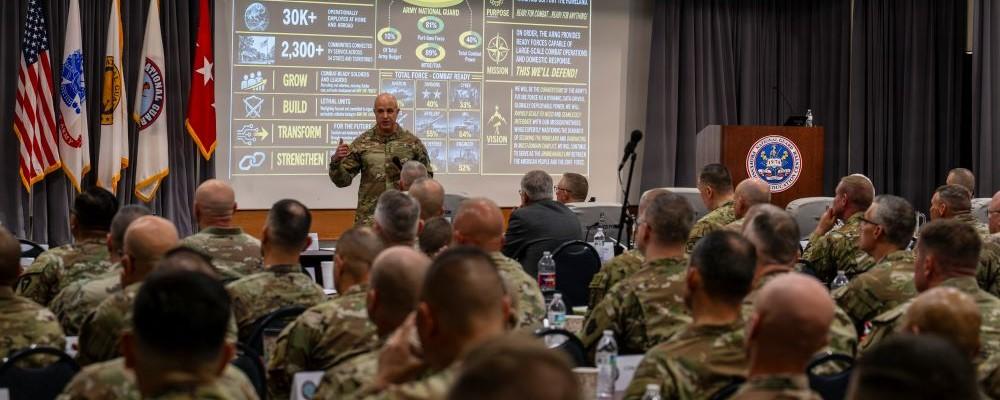
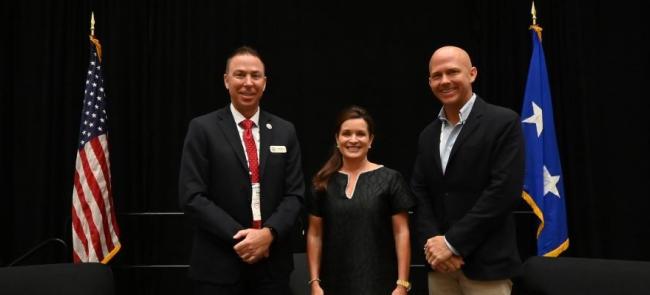
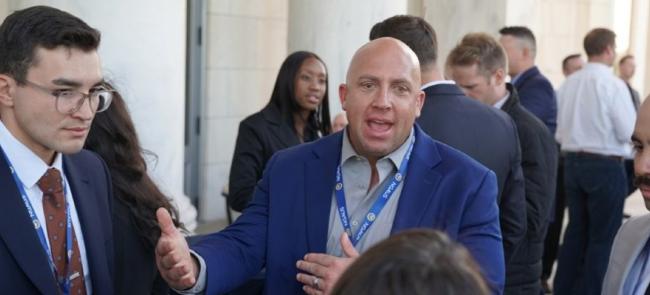
Army National Guard senior commanders gathered Nov. 6-8 at the National Guard Professional Education Center at Camp Robinson in North Little Rock, Arkansas, for the 2026 Green Tab Commanders Conference.
Hosted by Lt. Gen. Jonathan M. Stubbs, the Army Guard director, the GTCC brings together O-6 and above Green Tab command teams for direct leader-to-leader engagement on operational demands, Total Army priorities and readiness across the force.
The forum gives senior commanders a shared understanding of the strategic environment, priorities and decisions shaping their formations.
This year’s theme, Preparing for Large-Scale Mobilization Operations and Large-Scale Combat Operations, reflects the Army Guard’s responsibility to prepare formations not only to fight in LSCO, but to mobilize, validate, move and integrate those forces at the scale required to get them into the fight.
As the Army’s primary combat reserve, the Army Guard provides more than 40% of the Total Army’s combat power. Delivering that capability in a major conflict requires formations prepared to move from home station through mobilization and into the fight while rapidly integrating with the Total Army.
“Preparing for large-scale mobilization and large-scale combat operations starts with being brilliant at the basics,” Stubbs said. “We need qualified, disciplined and fit Soldiers, lethal crews and squads, maneuver-proficient platoons, and staffs that can command and control at echelon.”
Stubbs added, “That foundation is what allows us to mobilize at scale, integrate with the Total Army and deliver combat power when our nation calls.”
Large-scale mobilization is particularly consequential for a growing force of 329,000 Soldiers, organized across 54 states, territories and the District of Columbia. Generating combat power at scale requires synchronized actions from home station through mobilization, validation and onward movement. Commanders and staffs must understand and rehearse those processes before a crisis demands them.
That direction is reinforced in the Army Guard’s fiscal 2028-2030 training guidance, which challenges commanders to protect training time, prioritize mission-essential task proficiency and build lethal, adaptable and cohesive formations.
The GTCC gives commanders the opportunity to connect that strategic direction to operational action. Discussions centered on maximizing time during drill and annual training to build readiness, division alignment, Army Guard transformation and the training necessary to build readiness at echelon.
That scale also demands leaders who understand how their formations fit into the larger Army fight. At the division level, commanders must synchronize maneuvers, fires, intelligence, protection, sustainment and command and control across contested and dispersed environments.
“Large-scale combat operations demand that we think and train beyond individual units or capabilities,” said Maj. Gen. Richard A. Wholey Jr., the commander of the 263rd Army Air and Missile Defense Command. “Divisions must synchronize formations across states and components, integrate capabilities and effects at echelon, and ensure subordinate commanders understand their unit’s contribution to the larger fight.”
Transformation adds another layer of complexity. As formations adopt new capabilities, technologies and force structures, commanders must integrate change without sacrificing the fundamentals required to mobilize, deploy, fight and sustain operations.
While senior commanders synchronize formations and resources, readiness begins with Soldiers and the noncommissioned officers responsible for training and leading them, said Command Sgt. Maj. Brian Kendrick, the command sergeant major of the Army Guard.
“We have to build Soldiers who are fit, disciplined, technically and tactically competent, and ready to perform under pressure,” he said. “That means enforcing standards, developing junior leaders, building cohesive teams and making every training opportunity count. If we get that right at the squad and platoon level, we build formations that are ready when called.”
The Army Guard training guidance calls on commanders to “fight to train,” using deliberate training management and disciplined prioritization to build readiness despite finite time and resources. Institutional, individual and collective training must reinforce one another and produce formations capable of operating effectively at echelon.
“The value of GTCC is that commanders leave with a clearer understanding of the priorities and how their formations fit into the Army National Guard’s larger mission,” said Col. Jon Ward Gutauskas, the commander of the Army Guard’s Warrior Training Center at Fort Benning, Georgia. “Our responsibility is to take that guidance home and turn it into disciplined training plans, leader development and readiness decisions that prepare our Soldiers and units for mobilization and combat.”
—Reported by Maj. Cibeles Ramirez-Rodriguez
National Guard Bureau