then Add to Home Screen.
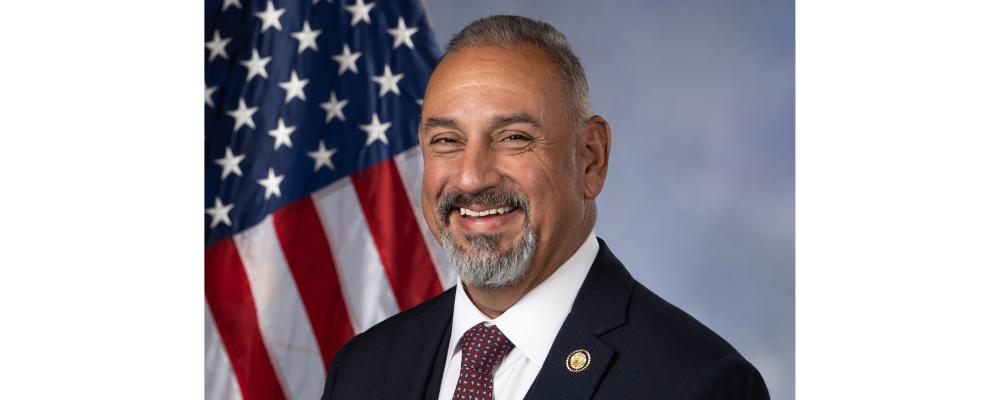
A Conversation with Rep. Gil Cisneros
The leading Capitol Hill champion of legislation aimed at streamlining the roughly 30 unequal and confusing National Guard and Reserve duty statuses into four broad categories is no newcomer to the need for duty status reform.
Rep. Gil Cisneros, D-Calif., saw the many problems the current system creates when he was a Navy supply officer working with Navy reservists.
He later discovered what he believes is a well-conceived Pentagon solution when he was under secretary of defense for personnel and readiness from 2021 to 2023. That remedy is at the heart of the Duty Status Reform Act (H.R. 6976) he introduced in January.
Cisneros and Rep. Jack Bergman, R-Mich., a retired Marine Corps lieutenant general and the cosponsor, say the bill will bolster readiness and mission performance in addition to the quality of life of Guardsmen and Reservists.
It is, however, a complex piece of legislation. Hundreds of statutes must be adjusted. Such bills often take time for lawmakers to digest and move forward.
Cisneros recently sat down with NATIONAL GUARD in his Capitol Office to talk about the Duty Status Reform Act, which now has a Senate counterpart bill. He said he knows the process may take time, but he’s sure of the need and confident of the outcome.
“I knew when I made the decision to come back to Congress that this was going to be the No. 1 thing that I wanted to push,” he said. “I wish we had been able to get it done when I was at the Pentagon.”
Congressman, you come from a military family. Both of your grandfathers served in World War II. Your father was a Vietnam veteran, and you served 11 years in the Navy. How has your family history and your own service shaped the way you approach military personnel issues in Congress?
I don’t know that [my family history] helps shape it, because none of my family was career. They came in, they did their service and they were long gone out of the military before I served. So, I never really experienced any of the military family aspect of it. It’s more my experience in the military, what I saw, and what I thought needed to be improved or made better.
You served as under secretary of defense for personnel and readiness from 2021 to 2023. What did that role teach you about the challenges facing today’s service members, especially those in the Guard and Reserve?
You never know when you’re going to be called up in the Guard and Reserves. You sign up to do your one weekend a month, your two-week AT every year, but then there’s involuntary recalls. Sometimes there’s opportunities out there where people do volunteer to kind of go out and spend some time on active duty. Sometimes they do it for a couple of weeks, sometimes it may be six months or a year or more. But the thing that we would see is that, whether it was voluntary or involuntary, making that transition from civilian life to the military was always a hassle. That is something that we’re working on to make better.
And this is one of the reasons why we’ve been working so “We want to make the process easier for Guardsmen and Reservists when they’re called to active duty.” hard on duty status reform. We want to make the process easier for Guardsmen and Reservists when they’re called to active duty, so that they don’t have to wait to get paid, so they don’t have to wait to get benefits, so their families aren’t waiting by their bills. That’s why it’s so important.
Did your time in the Pentagon give you a different appreciation, or maybe an expanded appreciation, for how difficult it can be to turn good personnel policy into actual law or implementation?
One thing at the Pentagon was it was easier for me to implement policy that we thought was good. We could make changes with the stroke of the pen and not always have to wait for legislation. But there are things — again like duty status reform — that I think is worth fighting for to ensure that we can minimize and simplify the process for calling up our reservists and National Guard to make it easier for them. And I will say that I used to be a TAR [Training and Administration of the Reserve] when I was in the Navy, so I worked with reservists as a full-time active-duty reservist.
Much like the AGR program in the National Guard and the Army and Air Force Reserves?
Right. So, I worked with reservists, Navy Reserves. I knew what they did. I spent the duty weekend with them. When they were there, I was there, so I have an appreciation for the two lives that they actually led. They had their civilian life, then they would come and do their military life as well. So, for me, I was able to kind of appreciate the work and the dedication that they had. And I would see the struggles and everything that they had to go through, especially when they were called up for active duty — sometimes going a month or even more waiting for that paycheck to come in. Their willingness to serve and to keep at it was something that I learned to appreciate about all that.
Duty status reform has been years in the making. The fiscal 2018 National Defense Authorization Act directed the Defense Department to develop a proposal to streamline the patchwork of roughly 30 Guard and Reserve duty statuses. What did you see during your time at DoD that convinced you that this reform was necessary?
That passed a year before I came to Congress the first time. But I was beneficiary of all that good work after [the Pentagon] started working on reform. So, when they kind of came up with the process, I was the one in the seat at P&R [the Office of the Under Secretary of Personnel and Readiness at the Pentagon] that they came in to and said, “OK, here it is. Here’s our duty status reform [proposal] that we’ve been working on.” They laid it out to me as to what it would change. And like I said, having worked with reservists, I could see what they were doing and all the work that they had put into this in order to simplify the process.
[During COVID] you’d have some Guard or Reserve units called up by the president, and then you would have Guard units that were called up by the governor. And they weren’t receiving the same pay. They weren’t receiving the same benefits. It was unfortunate, right? And so, this was one of the things that we needed to fix. And this is what they came to me with and what they presented to me to be able to help fix that.
Does the current system have an adverse effect on readiness?
I think it does. You have people who can be called up for one thing, but then there would only be enough money in the pot for a few weeks. So, then they must be released and kind of put on nether orders, then brought up on another status. And so, I think any time that you are messing with the service member, messing with their routine and what needs to be done, and kind of screwing with their pay and benefits or anything pertaining to their family, I think you are really putting readiness at risk. Eventually, there’s a potential for the service member to say, “You know what, I’m done. I don’t want to deal with this anymore. I don’t need it. Why do it?”
But if we can have a process that’s simple, where they’re not going to have to worry about their pay and benefits, where they can continue to serve without interruption, it’s going to be a better overall experience. It’s going to make them want to continue to serve and do what needs to be done and make their life a lot easier. And when life’s a lot easier, they’re going to do a better job.
We want to make the process easier for Guardsmen and Reservists when they’re called to active duty.
It’s not the flashiest issue in Congress, and it’s certainly not the easiest to explain. Why has duty status reform become so important to you personally?
Because I wanted to get it done when I was at the Pentagon. Like I said, they came to me. There are a lot of people who did a lot of hard work to develop duty status reform to simplify the process. And when they came to me and told me about it and sat me down and explained it to me, having had the experience that I had working in the reserves, I was like, Man, this is good work. This needs to be done. This is actually going to make things so much easier and better. I thought it was going to be a slam dunk, something we would be able to get done easily, and unfortunately, we weren’t.
But the other thing is, it’s something that everybody agrees on, right? The National Guard Bureau wants this. We had a hearing and the secretary of defense said he supported it. The Council of Governors supports it. This is something that should have been done a long time ago. I would hate to see something like this go to waste, all this good work and everything that so many people put into it that’s actually beneficial.
The holdup seems to be at the White House Office of Management and Budget. They are concerned about an increase in mandatory spending. What are you doing about working with the administration and across the aisle to get this moving forward?
They’re the holdup. Is it new? OMB was the holdup during the Biden administration too, as to kind of why this couldn’t go forward. But it’s just trying to educate them and kind of get them to realize that this whole idea of the mandatory spending — I don’t want to say it’s a figment of their imagination — but it’s that they’re thinking of it in the worst way.
And I would say the Congressional Budget Office score that we get attached to is kind of the same way as well. I mean there shouldn’t be a CBO score attached to this because it’s really not going to affect anything within the Department of Defense paywise. People are still going to get the pay. People are still going to serve. It’s not changing their pay and making it any different.
It’s just more efficient.
More efficient, right. Where it’s going to come is on the veterans’ benefits end. But why shouldn’t we be taking care of our veterans. If somebody is willing to put in the time to earn the benefits, why is that even a thought? It should be automatic. They put in the time to earn their GI Bill, so they can get their college degree. They put in the time if they’re going to do 20+ years to retire. You know that should not even be a concern or a thought. It’s not even a cost, right? It should be their benefit that they earned for serving our country, and it’s something that we should be willing as a nation to pay and give them for the work that they did and the commitment that they made.
You introduced the bill with Rep. Jack Bergman, another military veteran, a retired three-star general, and he’s also a very strong Guard and Reserve advocate. What has that partnership meant to the effort?
I’m glad to have Jack, General Bergman, as a partner in this because he gets it. He was a three-star [general]. He was the top Marine in the Marine Corps Reserves. He understands this completely.
To date, you have more than 40 co-sponsors, nearly equal support from Democrats and Republicans, almost completely equal. Additionally, Senators Jerry Moran and Jacky Rosen introduced an identical bill from the Senate. What does the bipartisan, bicamarel support say about the nature of this issue?
I think it says that we need to get it done. The fact that both sides of the aisle see this as something that’s important is something that hopefully tells the nation that this is a good bill. I’ve always said that whenever we can work together in a bipartisan fashion, and that’s obviously what’s going on here with this work, we always get the best results.
And I think that’s what’s happening right now. I think that’s why you’re getting equal support from Democrats and Republicans, both in the House and the Senate, because it is a good bill and it is going to pay dividends. It’s going to do something great not only for the country but for all the people who serve in uniform as well as in the National Guard and Reserves.
What are you hearing from Guardsmen and Reservists about the current duty status system?
They’re in favor of the reform. They see that it’s needed. A lot of them have seen it’s been needed for a long time because they’ve experienced it. They’ve experienced the disruption when they’ve been called up. Like I used to say, and I still say, your Guardsmen and Reservists, they only know four things: They know they’ve got their duty weekend, they’ve got to do their two-week AT and then there’s voluntary, involuntary orders. Yet we have 29 different statuses that they could fall into that could affect their pay and their service and the points that they earned towards retirement, and so it needs to be simplified. It needs to be simplified in a form so that they can understand it and know what they’re earning and how it’s working for them.
This is something that should have been done a long time ago.
NGAUS has made duty status reform its No. 1 legislative priority. How has the association helped educate members of Congress and build support for the bill?
We’re glad and happy to have them as a partner. They’ve been very enthusiastic about it, going out and talking to members of Congress, both in the House and the Senate about it and supporting it. So, we’re happy to have them as a partner and happy to have them as a champion of this legislation. And I think the work and the advocacy that they continue to fight for is going to be a big factor in eventually getting us over the hump and through the finish line one day.
So, looking ahead, what will it take to get duty status reform enacted, and what role do you hope the Guard and Reserve advocates will play in the effort?
I think they need to keep championing this “This is something that should have been done a long time ago.” bill. And I think they are doing that. And we want them to continue to talk about it and talk about how that, like you said, this is their No. 1 issue. They need to maintain this as their No. 1 issue. Where we could use their help and support, I think, is not only here in the halls of Congress, but also at the White House. And it doesn’t matter who the administration is, right? As for OMB, we need to get them to understand why this is so important to our Guard and Reserve and the nation when it comes to readiness.
Are we going to get this done?
We are going to get it done.
How long do you think it’s going to take?
It may take a couple years or so, but we’re going to keep fighting until we get this done.
When this legislation becomes law, what do you hope a Guardsman and Reservist will notice five or 10 years from now about how this new reform system works?
First, let me say those who have had to experience the old way, when this legislation comes in, when it finally does get enacted, hopefully, they’ll be able to see the benefit of it. The simplification of it and how much better it is. For those who are kind of new coming in at that time, hopefully there won’t be anything that they’ll recognize. They will just be able to say this is actually working very well for us.
And the older guys and women will tell them how bad it used to be. But not anymore.
Right. It’ll be, as we say in the Navy, “a sea story” that they’ll talk about. Back in our days, this is how it used to be.
Now you’re working for the Army and the Air Force.
We’re working for everybody, right? I think this is part of my role. This is an extension of what we were trying to get done when I was at the Pentagon. I knew when I made the decision to come back to Congress that this was going to be the No. 1 thing that I wanted to push. I wish we had been able to get it done when I was at the Pentagon. We were looking for partners, but unfortunately, we ran into a roadblock at OMB. That did deter me. Now, we’re working on it from the other side, the other side of Pennsylvania Avenue.
Categories, duty types & authorities under the Duty Status Reform Act
Category I — Contingency Duty
● War
● National emergency
● Disaster response
● Cyber/WMD events
● Presidential call-ups
● Preplanned missions
Category II — Training and Support
● Disciplinary jurisdiction
● Missing status
● Required active-duty training
● Active Guard and Reserve functions
Category III — Reserve Support Duty
● Annual training
● Musters IDT-like duties
● Additional training with consent
Category IV — Remote Assignments
● Flexible tasks
● Online learning
● Individual, nonsupervised duties
AT A GLANCE: Rep. Gil Cisneros
BORN: Gilbert Ray Cisneros Jr., 1971 (Torrance, Calif.)
FAMILY: Wife (Jacki), twin sons
EDUCATION: George Washington University, Washington, D.C., B.A. Political Science, 1994; Regis University, Denver, Colo, M.B.A., 2002; Brown University, Providence, R.I., M.A. Urban Education Policy
CIVILIAN WORK EXPERIENCE: Member, U.S. House of Representatives, California’s 31st Congressional District, 2025-present; Under Secretary of Defense for Personnel and Readiness, 2021-2023; Member, U.S. House of Representatives, California’s 39th Congressional District, 2019-2021; Shipping and Manufacturing Manager, Frito-Lay
COMMITTEE ASSIGNMENTS: Armed Services Committee and Committee on Small Business
MILITARY SERVICE: Enlisted in the Navy in 1989, received a Navy ROTC scholarship and commissioned as an officer in the Navy in 1994, serving 10 years as a supply officer. Separated from the Navy as a lieutenant commander.
ALSO NOTABLE: In 2010, he and his wife established The Gilbert & Jacki Cisneros Foundation, which provides college scholarships and college access programs. In 2019, he co-founded the House Military Transition Assistance Pathway Caucus, which supports and advocates for service members returning to civilian life. Known to be focused on the issues of mental health and suicide among service members and veterans. Los Angeles Dodgers season ticket holder with the largest collection of Dodger bobbleheads on Capitol Hill.
Source: House bio