then Add to Home Screen.

Citizen Airman
Tidal Wave: The Pilots, The Princess, and the Enemy Ace - A True Story of Courage and Survival in WWII by Adam Makos
A new book tells the story of a Guard drummer who ended up co-piloting a plane in one of the most daring bomber missions of World War II.
Lt. Ernie Poulson was a 22-year-old outdoorsman from Utah who grew up hunting and fishing with his father, a game warden. The wilderness taught him how to track, survive and never give up.
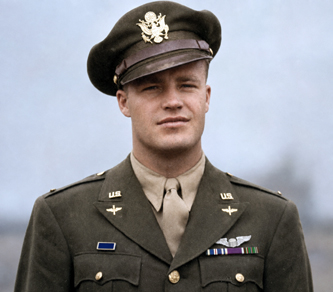
But Ernie dreamed of seeing the world. To help pay for college, he joined the Utah National Guard’s 116th Engineer Band. When war came, he decided that anything was better than spending it “banging on a snare drum.” He volunteered for the Army Air Forces and became a B-24 Liberator bomber pilot.
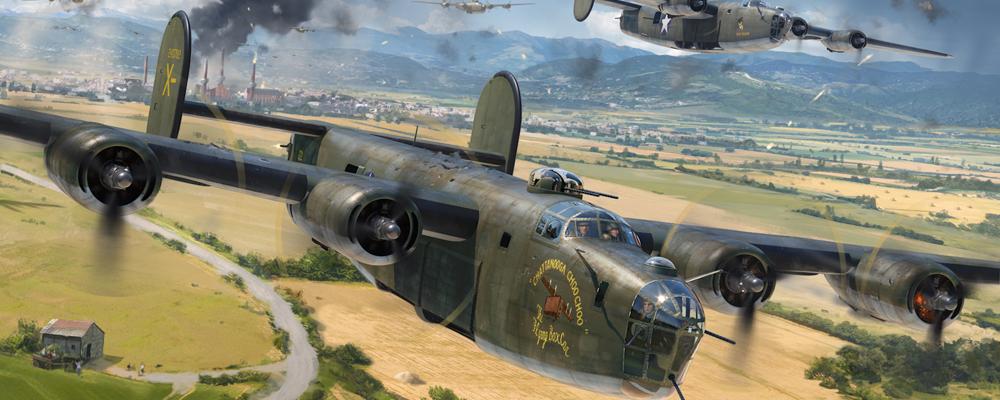
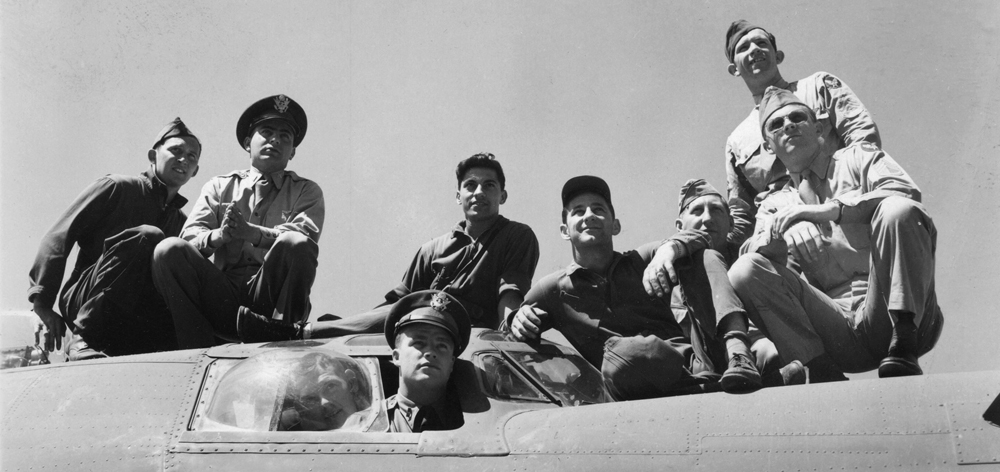
It was a decision that would take him farther than he ever imagined. On Aug. 1, 1943, Ernie was in the co-pilot’s seat of the B-24 Chattanooga Choo Choo, flying with the 389th Bomb Group on one of the most daring missions of World War II, Operation Tidal Wave.
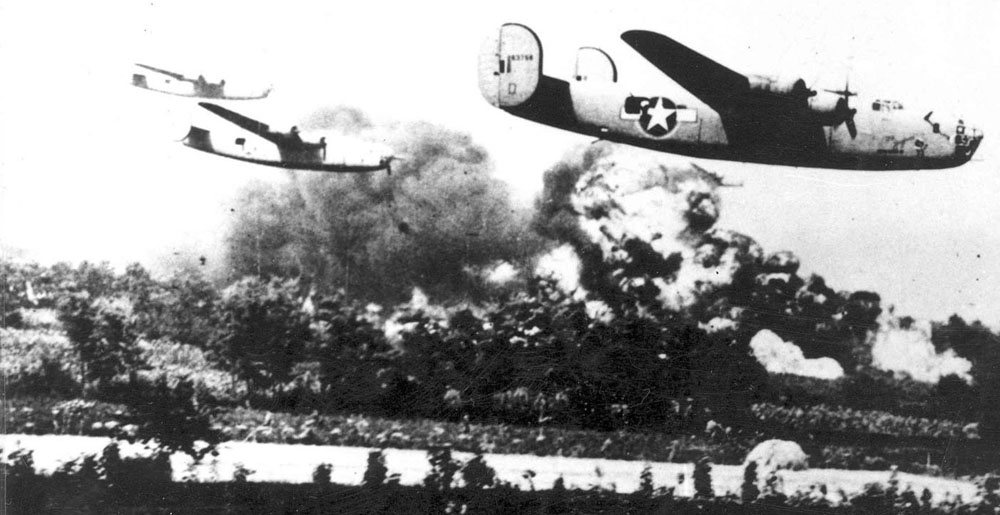
That morning, 178 American bombers took off from Benghazi, Libya. Their target: “Hitler’s Gas Station,” the oil refineries at Ploesti, Romania, that helped fuel the Nazi war machine. Destroy them and the Allies might shorten the war by months.
The young American flyboys would attack at treetop height, flying straight into a storm of enemy anti-aircraft fire. It would become the most highly decorated air mission in American history, including five Medals of Honor, 56 Distinguished Service Crosses and more than 1,700 Distinguished Flying Crosses.
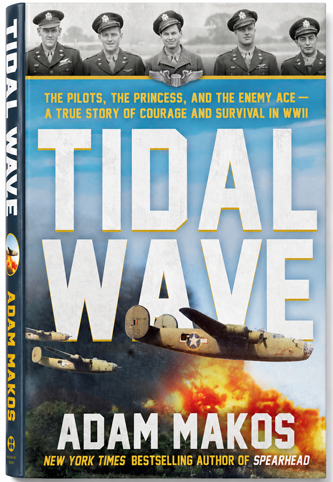 But the price was staggering: 53 bombers lost and more than 500 airmen dead or missing. It was the worst loss ever suffered by the USAAF on a single mission. Poulson and the crew of the Chattanooga Choo Choo were among those shot down. Their bomber crashed in a dry riverbed on a sprawling estate, in a country allied with Hitler.
In the excerpt that begins (below) from Tidal Wave, the new book by bestselling author Adam Makos, we join Ernie as he awakens in the wreckage of his bomber. He has survived one of the deadliest air battles of World War II. But his fight to stay alive is only the beginning.
It was almost heavenly.
Dust settled into the cockpit, drifting down in slow weightless filaments, catching the sunbeams as Ernie opened his eyes. For a moment he wondered if he had awakened in some angelic realm. But the ache in his banged-up wrist reminded him he was still alive, sitting partially upright, still strapped in his seat.
The entire cockpit — windshield, instrument panel, and his seat — had rotated about 40 degrees to the right. The cockpit ceiling had peeled back like a door on a hinge. Above him was blue sky. To his left sat Bob, groggy, still secured to his seat.
Ernie smelled fuel. A spare 450-gallon tank had ruptured, producing a swell of gasoline that had sloshed forward from the bomb bay. He could see smoke rising on Bob’s [Lt. Bob O’Reilly, the pilot] side of the plane. The engine was still burning! It wouldn’t be long before the seep of fuel connected with fire.
Ernie yanked at his seatbelt, but before the metal restraint gave way, Bob stepped on his thigh, using him as a human springboard to push himself up and out through the hole in the ceiling.
“C’mon!” Bob said. “We gotta get out!”
Ernie tried his seatbelt again. This time Al [Lt. Al Romano, the bombardier] jumped on his lap and pushed himself out. Riffle [Sgt. Clell Riffle, the top turret gunner] followed. The men had all smelled the fuel and were rushing to exit the plane before it exploded.
Ernie yanked at his buckle again. It released, and he scrambled out. “Clear the plane!” he shouted to anyone remaining. His first steps felt like being born again. “It seemed incredible that I could still walk around,” he later recalled.
From a safe distance, Ernie surveyed the damage, trying simultaneously to determine a headcount. The bomber’s wing had driven itself forward into the bomb bay, crushing everything in front of it. Behind the wing, the crew was still emerging. The nose of the bomber was flattened, and the floor in that section had compressed into the ceiling. He caught sight of Bob and Al scaling the embankment and gave chase but could only manage a half stumble. His ankle still stung from shrapnel.
At the top of the embankment, Ernie dropped to the grass. A familiar drone filled the air. He looked north. The last planes of the bomb group flew past, heading for home. A sinking feeling settled in. That vow of his — If only one plane comes back — wasn’t going to be fulfilled now.
The crew gathered around the pilots, taking stock of their surroundings. Rurak [Sgt. Phill Rurak, a waist runner] carried Riffle over and carefully lowered him to the ground. In addition to his flak wounds, Riffle had broken ribs from the crash, though he didn’t know it yet. Bowker [Sgt. Jack Bowker, a waist gunner] lugged Louis Medeiros up the final steps of the hill, the gunner’s flight suit soaked through. The hydraulics in Medeiros’ turret had ruptured, spilling fluid all over him. His legs were banged up and bruised. Each man wore his helmet and life preserver. Each was trying to come to grips with what they had just survived. Uphill from the wreckage lay a fancy garden and a manor house. Evidently, they had crash-landed on the edge of some Romanian’s estate. They were about 10 miles from Câmpina.
“Where’s Dick?” Ernie said, looking around for Britt [Lt. Richard Britt, the navigator]. A quick count revealed eight men on the hilltop. Two were missing.
“Who’s not here yet?” Bob barked.
“Britt and Kees [Sgt. Frank Kees, the navigator],” Al said. “Britt was smashed on the flight deck. And Kees — Kees is in there.” He pointed to the tangle of wrecked metal “that had been our powerful warbird.” When the wing had crashed through the fuselage, it tore loose the top turret, sending it flying downward. Kees had been completely crushed. Riffle murmured his concurrence. He’d seen it too.
They were both dead? Ernie struggled to comprehend the news. Before he could get far, Bob cut in. “Look sharp. We’ve got company.”
A half mile down the embankment, a group of Romanians had gathered. Some were civilians. Others wore brown uniforms, guns drawn. They moved toward the Americans, walking a few steps, then breaking into a run.
All thoughts turned to survival. Across the roadway lay a cornfield. “Best we conceal ourselves in there,” Ernie said.
The gunners lifted the wounded men, and the crew moved across the road. Riffle would recall later: “I found I could walk by dragging my leg a little.” They pushed into the field about two hundred yards; then everyone took a knee. Bob and the other city boys looked to Ernie, the outdoorsman. He quickly assessed their options. They needed to make their way to the Alps, where they could hide indefinitely. But for now, they simply needed to get as far away from the wreckage as possible.
“Split up and make a run for it,” Ernie said. The wounded men would slow them down, but they couldn’t leave them behind. “Bob, you take Riffle. I’ll take Louie.”. Al volunteered to help with Medeiros.
“Everybody, work your way toward the foothills,” Ernie said. “Head west over the mountains to Yugoslavia.” Bob and the others conferred, grasping for details. But Ernie shook his head. “No time. They saw us head into the field. We gotta go.”
Ernie hoisted Medeiros up and slung the wounded man’s arm over his shoulder. Bob headed in the other direction with the rest of the group. With Al’s help, Ernie pushed deeper into the cornfield. Cornstalks slapped them in the face. Ernie winced with every step.
They could still get away, he told himself.
As Ernie’s group moved through the corn, the scream of airplane engines overhead drew their attention upward. The men peered through the stalks at the pale blue sky. One after another, four Messerschmitt 109s streaked overhead at one thousand feet, chasing the fleeing American bombers. Overall, the Romanian and German fighters had been duped. They’d been at high altitude over Ploesti searching for the Americans, thinking they would attack at 25,000 feet. But they’d figured it out by now.
Ernie set aside his concerns for his fellow fliers and led his men forward. The high cornstalks bristled against them, slowing their progress. On the fly, Ernie stripped off his helmet and life preserver. The others did the same. They’d be faster now. He pulled out his small survival compass, pausing to orient himself. He let go of Medeiros to read his compass. The suave tail gunner sunk to his knees.
“We gotta keep going, Louie. Can you crawl? We’ll be with you.”
Medeiros nodded.
Ernie and Al dropped to their hands and knees with Medeiros, and Ernie led them deeper into the field, the cornstalks bending and snapping as they crawled forward. A low rumble swelled to the north. The bombs that had been on acid-fuse timers were now exploding in the distant refinery.
They’re really going to love us now.
Shouts rang out behind them. The Romanians were homing in, voices sharp. They were at the edge of the cornfield. A chill shot through Ernie. All those times he’d gone hunting with his dad, he never imagined himself being at the other end of a rifle barrel. More shouts were heard, this time farther up the field. They’re surrounding us. Just like quail. We’re about to be flushed.
A pursuer let rip with a handheld machine gun. Bullets snapped and whizzed through the cornstalks. Al and Medeiros hit the dirt. Ernie drew his .45 pistol and whirled around, ready for the enemy to come charging through the corn. But no further shots rang out. It had been a warning, Ernie concluded. If the Romanians wanted to kill them, they would have strafed the entire field.
Instead, the Americans heard more “excited voices,” in a foreign tongue, “talking and jabbering.” To Al’s ears, the language sounded like Italian. The Romanians had found their tracks. Slowly the pursuers advanced.
Ernie sensed there was still time to escape. All he needed to do was get up and run like hell. But he couldn’t leave a wounded man. Ernie concealed his compass in the small watch pocket on the front hip of his pants. He took a $20 bill from his wallet and slid it into his sock. The thrashing noise came nearer. Ernie holstered his pistol and turned to Al. “Got a handkerchief?”
Ernie was the tallest. He stood and hoisted the small patch of white above the cornstalks. Al stood alongside his lieutenant and raised his hands in surrender. Medeiros “crawled about 5–7 paces away” and buried his face in the dirt.
What will they do to us? Ernie wondered. Will they beat us? Shoot us?
Ernie spotted their rifles first, aimed from the hip. The Romanians — middle-aged soldiers from a Home Guard unit, wearing brown uniforms and caps with soft points at the front— rushed at Ernie and Al. One grabbed Ernie’s pistol and tied his hands. Tagging along behind the Home Guard men were a few teenage peasant boys. One boy snatched Ernie’s knife, while soldiers searched Al. Ernie stood stock still. Playing possum proved futile for Medeiros. Two hands grabbed him by the legs and swiftly dragged him toward the others.
The Romanians prodded Ernie and his party back to their wrecked bomber. Bob’s group had not been caught yet. The captors set armed guards on the Americans and forced them to lie face down near the charred remains of their aircraft. The smell of burnt wires and rubber filled the air. Fortunately, a few teenaged boys wielding fire extinguishers arrived to dowse the smoldering engine.
“Scores of pistols and rifles were cocked and pointed at us,” Ernie later recalled. “Their shaky hands on their cocked pistols gave me a good deal of worry. Although their speech was foreign to us, we could tell they were arguing about what to do with us.”
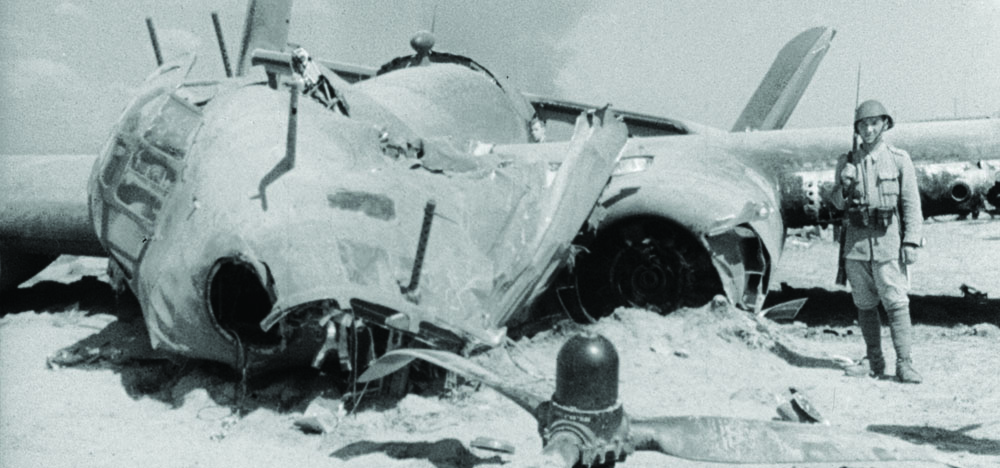
Ernie lay with his cheek on the ground, eyes locked on Chattanooga Choo Choo in the near distance. The bomber lay dead, like a great beast brought down on safari. The crash had almost completely broken up the airplane.(1) Only the wing and the twin tails were reasonably intact. The rest was a tangle of metal.
Medeiros eyed the twisted nose of the plane and whispered, “How in the hell did you get out of that cockpit alive, Lieutenant?” The smiling boxcar’s face was flattened into the stones.
“A puzzled sigh was all I could offer,” Ernie would later write. “My mind was occupied with the unpleasant thought that Dick’s and Frank’s bodies were twisted and smashed in that mess.”
* * *
Within a few moments, a crowd of civilians formed, drawn to the wrecked bomber “the way people always do when there’s a crash.” Fifty people? A hundred? They came from fields and farms, some armed with pitchforks and double-bladed axes, the wheels of their wagons painted with bright, colorful patterns. Other spectators looked to be middle-aged couples in their Sunday clothes. Teenaged boys strolled in with their girlfriends, as if on a date. The Romanians were raven-haired like the Italians, but sharp featured and not as tan. Everyone seemed to be pointing at the white star on the wing of Chattanooga Choo Choo and talking fast. Ernie noted that “their hands trembled, and their voices were shaky:” they murmured the same word over and over. But what did it mean?
As the crowd pressed closer around the Americans, Ernie and his crew would learn a harsh truth. A downed airman needed to worry about the civilians the most. “The military personnel have at least some semblance of order and discipline,” explained another captured B-24 pilot. “But you never know what to expect out of the civilian population, especially if they have been bombed.”
Civilians began shouting and screaming. The crowd whipped itself into a frenzy, singling out the tallest of the three captured invaders: Ernie. Someone kicked him in the ribs as he lay on the ground. Medeiros saw a peasant woman come “from nowhere” and fling herself on Ernie, pounding away at his body with her fists and shouting, “Ruski!” A guardsman “pointed his gun at her,” but she didn’t stop.
When at last the woman tired, the teenage boy who’d taken Ernie’s knife stepped forward. He held the blade poised over Ernie’s chest, then ripped the silver wings from the breast of his suntans. Beside him, Ernie heard Al “furiously” reciting the Hail Mary and Our Father prayers.
The mob was getting out of control, shouting insults, spitting, their screams rising to a fever pitch. Finally, one of the Home Guard snapped. He “cut loose” with his machine pistol, firing a burst of gunfire into the ground so close to Medeiros’s face that he felt the spray of dirt. The crowd recoiled, retreating for the moment, but they kept murmuring, “Ruski. Ruski.”
Ernie connected the dots. To a Romanian civilian, any star on a plane, red or white, signified the same thing: Russia. The Russians were Romania’s enemy, “for whom they have a real mortal fear, and loathe to no end.” The Soviets had dragged the Romanians into war by invading their territory. The USSR had killed or captured 150,000 of their boys at Stalingrad and 70,000 more at Odessa. The USSR was the reason all the young farmers were gone from their fields and fighting for Hitler. Ernie thought fast.
“Yo sunt aviator American!”
A hush began to spread.
“Yo sunt aviator American!”
Ernie called again, this time louder. The crowd calmed a bit more. Ernie had studied the Romanian phrase book issued by the Intel boys. Slowly, two new words began to form on the crowd’s lips. “Sunt Americani!” They’re Americans!
“I think they understood,” Ernie would later recall, “but were nevertheless fearful of us.”
One civilian stepped forward and tried to communicate with the Americans in fractured English. But the Home Guard ushered him back to the crowd with their rifles. Their superiors would handle the interrogation.
The guards loaded Ernie, Al, and Medeiros into a horse-drawn cart and cracked the whip, leading them back up the embankment toward the hilltop village of Nedelea. Ernie stole a last fleeting glance at their plane and the distant alps.
Minutes later, the three Americans were unloaded at a derelict farm on the edge of the village. The Home Guard used this as a makeshift defense post. The guards freed the airmen’s hands and searched them again, this time taking their watches and leather jackets and Ernie’s wallet and ring. They opened a trapdoor to an abandoned cistern and shoved a ladder down the hole.
Ernie and Al inched their way down the rungs. Medeiros labored the entire way. The room below was about 12 feet high and twenty feet across, with a dirt floor. The guardsmen slammed the trapdoor, plunging the chamber into darkness.
A million thoughts raced through Ernie’s mind. A few minutes passed before he broke the silence.
“Well, this is a pretty bad way to spend the summer.”
Al and Medeiros wanted to laugh, they truly did, but any sense of humor had gone out the window when they crashed. The joke fell flat.
Ernie couldn’t blame them.
It wasn’t supposed to go like this. But it had. They had no idea who else had lived or died from the 389th and there was no telling whether the overall operation was a success. The other four groups could have been wiped out for all he knew.
They were prisoners of war. And the hardest part for Ernie was accepting that Britt, one of his closest friends, was dead.
It was almost impossible to believe.
Wrap-up
Ernie would soon discover that he and his crew weren’t quite alone in Romania. They would find an unlikely ally in a Romanian princess who called the captured Americans “her boys” and vowed to help them survive what came next.
Ernie would find himself in one of the strangest POW experiences of World War II, imprisoned alongside 109 other Americans in Transylvania.
There, the former Utah Guardsman would make history once again. He would help lead a daring escape, becoming one of only two known American POWs to escape from Axis captivity in Europe.
Endnote
(1)The B-24 had a reputation for breaking apart in a crash, and it tended to live up to expectations. The issue lay in its design. The fuselage was built beneath a high-set wing, not over it as on the B-17. During a crash, all that dead weight would come crashing forward, compounding any destruction.
ADAM MAKOS, the author of Tidal Wave, can be reached via [email protected].
TOP PHOTO: A digital painting depicts the B-24 Chattanooga Choo Choo bombing the Axis oil refineries in Ploesti, Romania. (GARETH HECTOR)
LOOKING BACK: Operation Tidal Wave
“Those gallant and brilliant young Americans who raided Ploesti won a smashing victory.” So declared President Franklin D. Roosevelt in his Sept. 17, 1943, message to Congress.
Historians will continue to debate the effectiveness of Operation Tidal Wave, but Roosevelt was right that the Aug. 1 raid achieved some real victories.
Six out of nine refineries were damaged, and more than 38,000 barrels of petroleum products went up in smoke. Most significantly, two of the damaged refineries were Romania’s most modern, and their loss deprived Germany of vital aviation gasoline and lubricating oils.
For the crews of the 178 bombers, the price was staggering. The raid cost 53 aircraft and more than 310 lives. Five airmen received the Medal of Honor — including three posthumously — the most ever awarded for a single air operation. All five bomber groups received the Presidential Unit Citation.
Among the posthumous recipients was an Ohio National Guardsman, Lt. Col. Addison Baker. When his B-24, Hell’s Wench, was hit and engulfed in flames, Baker refused to abandon his formation. Leading his bombers over the target, he released his bombs before attempting to gain altitude so his crew could bail out. Despite his efforts, the bomber crashed, killing all 10 aboard.
Tidal Wave was the opening blow in the Army Air Forces’ systematic campaign against Germany’s oil production, which resumed the following spring. By the end of August 1944, U.S. and British bombers had finished the job, effectively putting Ploesti out of business.
—By Adam Makos